Address
304 North Cardinal St.
Dorchester Center, MA 02124
Work Hours
Monday to Friday: 7AM - 7PM
Weekend: 10AM - 5PM
Address
304 North Cardinal St.
Dorchester Center, MA 02124
Work Hours
Monday to Friday: 7AM - 7PM
Weekend: 10AM - 5PM

Abstracts: The bonding quality of the second interface of cementing(the bonding surface between the cement sheath and the wellbore wall)seriously affects the isolation effect and production stability of oil and gas wells.At present,there is no unified standard and method for the indoor evaluation of the second interface of cementing. Based on the influence of mud cake on the bonding quality of cementing,the mechanical method,acoustic method and microstructure analysis method were used to evaluate the bonding quality of rock-cement combination samples before and after interface treatment and at different curing times,and an indoor evaluation method for the bonding quality of the second interface of cementing was established.The results show that the quality of the bonding of the second interface of cementing is closely related to the cleanliness of the bonding surface and the curing time.The less mud cake there is at the bonding surface,the longer the curing time,the higher the shear bonding strength,the greater the longitudinal wave velocity and the first wave amplitude,the smaller the contact gap between the formation and the cement,and the higher the bonding quality of the second interface of cementing.
Key words: mud cake;cementing;second interface;bonding quality;evaluation method
Introduction
Under the action of differential pressure, the drilling fluid will be filtered to the well wall during drilling, forming a layer of filter cake on the well wall. Due to the existence of filter cake, the cement stone cannot be directly cemented with the well wall, and it is easy to form a micro-gap between the cement ring and the well wall, resulting in poor cementation quality at the second interface. At present, most of the root causes of cementing quality problems in oil and gas wells are the failure of the cementing second interface sealing system, so it is necessary to carry out multi-dimensional evaluation methods for cementing second interface cementing quality.
At present, there is no unified method and standard for the determination of cementing strength at the second interface. Huang Hefu et al. specially designed the “cement ring interface compression tester” and other devices to study the relationship between cement shear strength and cement compressive strength at the cement ring interface. Yang Chunhe et al.2 comprehensively analyzed the factors such as lithology, interface roughness, drilling fluid residue, and flushing fluid cleaning, and established a more scientific new method for indoor evaluation of cementing second interface cementing tensile strength. Zhao Letian (3) can indirectly evaluate the cementation quality and sealing performance of the interface by testing the equivalent permeability of the cementing surface, and realize the quantitative evaluation of the cementing quality of the second interface of cementing. Gu Jun et al.4 designed a simulation evaluation device for sealing capacity with equivalent permeability as the evaluation index, but it is only suitable for low-permeability argillaceous siltstone interlayers. K.N et al. 5 pointed out that the cement strength can be strengthened by removing the oil-based filter cake and reversing the wettability of the wellbore surface, and Y.Yan et al. numerically simulated perforation to cause local damage to the interface between cement and cementing, and the results showed that in order to reduce the interface damage caused by perforation, cement with lower shear modulus should be selected. Liu Huajie et al.7 designed a hydraulic cementing strength evaluation device under disturbance conditions. Sun Zhifeng et al.8 tried to quantitatively evaluate the cementing quality of the second cementing surface by acoustic method, but it was difficult to directly observe the specific cementation of the second interface when evaluating the second cementing interface by acoustic wave method, resulting in the accuracy and reliability of the evaluation results. In the early days, Zhang Hongbing et al.9 proposed a method to quantitatively evaluate the cementing strength of the second interface of cementing by processing and analyzing the formation wave signals, but the CBL/VDL technology can only test the average cementation around the acoustic energy, and cannot evaluate the cement quality of a single cement. Qian Yuping et al.10 proposed a method to evaluate the cementation quality of the second interface of cementing by studying the reflected echo of the sector cement cement logging instrument, which mainly evaluates the quality of cement ring cementation by the magnitude of the amplitude attenuation of the sound source, and the pulse width of different sound sources will affect the ultrasonic reflection echo of the second interface. Lu Peiqing et al. used energy spectroscopy analysis, X-ray analysis, nuclear magnetic resonance and other techniques to analyze and identify the microscopic morphology and material components of the second interface of the cementation, and determined the microstructure and evolution law of the cemented surface products.
The residual filter cake at the well wall has a great influence on the cementing strength of the second interface of the cement, and three conventional methods are mainly used to eliminate the filter cake at the well wall in the field cementing operation: mechanical removal method, curing method and flushing method. Many scholars have studied the influence of filter cake cleaning method, cleaning degree and other factors on the cementing quality of the second interface through indoor modeling, simulation calculations and other means, but there is a lack of unified indoor evaluation method standards, and due to the influence of multiple factors, various evaluation methods of cementing second interface cementing quality cannot accurately provide evaluation results. By simulating the cementing conditions between the mud ring and the well wall in the laboratory, changing the cleanliness degree and maintenance time of the interface, and using mechanical, acoustic and microscopic analysis methods to comprehensively evaluate the limitations of a single technical means, a scientific, systematic and accurate indoor evaluation method for cementing the cementing strength of the second interface was established.
1 Establishment of evaluation methods
1.1 Evaluation of shear cementation strength
Drill rock samples, cut and polish them to obtain smooth and flat cylindrical specimens. The rock sample is put into the drilling fluid cup of the high-temperature and high-pressure filtration instrument, and the drilling fluid is poured over the rock sample, and the rock sample is filtered out for 120 minutes under the experimental conditions of 120 °C and 3.5 MPa, so that a layer of filter cake with a relatively uniform thickness is formed on the surface of the rock sample, as shown in Fig. 1. The core attached to the filter cake is put into the filter cylinder, poured with water and emulsifier for 20 minutes, and the virtual filter cake layer on the surface of the rock sample is cleaned as much as possible, simulating the flushing process of the filter cake in cementing operation.
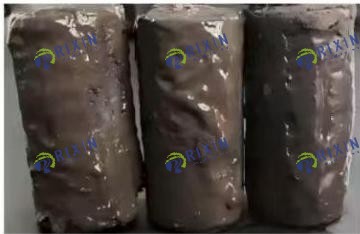
Fig.1 The filter cake formed after the filtration of drilling fluid
The “extrusion method” is currently the most commonly used method to evaluate the quality of the second cementing surface of cementing, which fixes the PVC pipe with epoxy resin glue on the plastic plate to make a cement cementing mold. Put the core into the middle of the mold, pour the well cement into the air between the mold and the core ring, and after the cement is initially solidified, put it into the water bath box, and the 85°C constant temperature water bath is cured for 2 days and 7 days, and the cement curing device is shown in Figure 2.
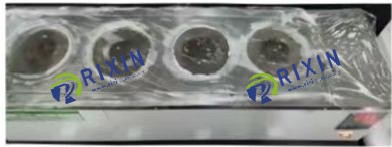
Fig.2 Cementing experimental water bath maintenance device
After the curing, the sample is taken out of the water bath, cooled naturally to room temperature, and the core is pressed out by using a universal briquetting block on an electronic universal testing machine, and the shear force of the cement ring and rock is recorded, and the shear cement strength at the second interface of cementing is calculated through Equation (1).

(1) In the formula: P— shear cement strength, MPa; F— Shear force, N; D—Core diameter, mm; h — core height, mm.
1.2 Acoustic method evaluation
The amplitude of the first wave refers to the amplitude of the first half of the wave received by the signal receiving device, and the amplitude of the sound wave reflects the attenuation law of the sound wave energy in the process of medium propagation. Because the energy of sound waves is small and the time spent on rocks is short, the propagation process of sound waves in rocks can be regarded as satisfying Hooke’s law of linear theory, that is, small deformations are directly proportional to the applied load. Since the longitudinal wave velocity is relatively easy to identify, the longitudinal wave velocity is often used to indirectly obtain the dynamic mechanical parameters such as the elastic modulus and Poisson’s ratio of the rock.
At present, the method of determining the longitudinal wave velocity of rocks mainly adopts the pulse wave penetration method, two ultrasonic probes are placed on the same measurement line of the specimen, and the pulse generator is used to generate a high-voltage pulse signal, and the signal is emitted by the transmitting probe and propagated in the sample to be tested, and then received by the receiving probe, so that the difference between the signal occurrence time and the receiving time T₀ can be obtained, and the propagation time between the samples can be obtained △T, and the longitudinal wave velocity of the rock can be calculated in combination with the length L of the specimen. The formula for calculating the longitudinal wave velocity is shown in equations (2) and (3).

(2)
△T=T-T 。
(3)
Where: V—longitudinal wave velocity, m/s; L — length of the sample, m; △T—propagation time of sound waves in the sample, s; T—Time of the acoustic test system, s; T。 – Time of coupling of two probes, 8.
After coring, cutting and polishing the rock slab, 8 cylindrical specimens with a diameter of 25mm were obtained. A small hole with a diameter of 10 mm was drilled in the center of the specimen using a precision micro bench drill, and the experimental sample after drilling is shown in Fig. 3. The bottom of the specimen is sealed with a thin piece of rock, and then it is installed in the core gripper to carry out the drilling fluid displacement experiment, so that the drilling fluid is filtered from the inside out, and a layer of filter cake with a relatively uniform thickness is formed on the inner wall of the rock. The rock sample attached to the filter cake is fixed on a rigid plastic plate with epoxy resin, and soaked in water and emulsifier for 20 minutes according to the experimental requirements, and the filter cake is removed as much as possible. During the soaking period, the liquid reduced by the penetration of the inner wall of the rock should be continuously replenished to ensure that the filter cake on the inner wall of the entire rock is immersed in the experimental liquid. After the soaking experiment, pour out the soaking liquid. Carefully inject cement into the inner hole of the rock, gently tap the rock face to eliminate possible remaining bubbles, and constantly replenish the water mud to be level with the rock end face. After the cement is first set, it is transferred to a water bath and maintained in a constant temperature water bath at 85°C for 2 days and 7 days. After the curing, the cement ring (Fig. 4) is taken out, cooled to room temperature, and the acoustic parameters of the cemented surface (first wave amplitude and longitudinal wave velocity) are tested by a rock acoustic tester.
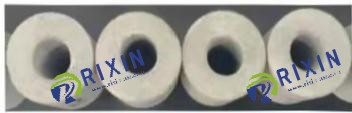
Fig.3 Rock samples after drilling
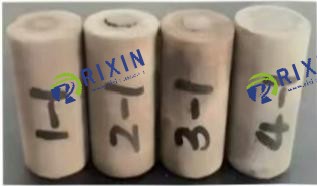
Fig.4 Cement ring sample
1.3 Microstructure evaluation
In order to more accurately evaluate the cementing quality of the second interface of cementing, the interfacial microstructure analysis of the cementing surface of the formation-cement-stone assemblage sample was analyzed by automatic mineral analysis equipment, and a more systematic indoor evaluation method for the cementing quality of the cementing second interface was established.
The cylindrical specimens with sizes of 25 mm × 10 mm are cut along the diameter, then put into the drilling fluid cup of the high-temperature and high-pressure filtration instrument, pour the drilling fluid into it, and filter it for 120 minutes under the experimental conditions of 120 °C and 3.5 MPa, so that the cutting surface of the rock sample forms a layer of filter cake with a relatively uniform thickness. The core attached to the filter cake is put into the filter cylinder, and water and emulsifier are poured into the filter cylinder for 20 minutes respectively to clean the virtual filter cake layer on the surface of the rock sample as much as possible, and simulate the flushing process of the filter cake in cementing operation. The treated rock sample is put into the mold, the cement is poured, and after the cement is first solidified, it is placed in a human water bath and maintained in a constant temperature water bath at 85 °C for 2 days and 7 days. After the curing, the end face of the cement stone is polished and polished, and the assembly sample for electron microscopy scanning experiment is obtained, as shown in Fig. 5(a). A low-vacuum coating instrument is used to coat the polished and dried rock samples with high-purity carbon wire to make the sample end surface conductive, prevent the electrons in the electron microscope from directly irradiating the core surface and reflecting light, and put the sample into the vacuum chamber of the instrument for electron microscopy scanning and observation, as shown in Fig. 5(b).
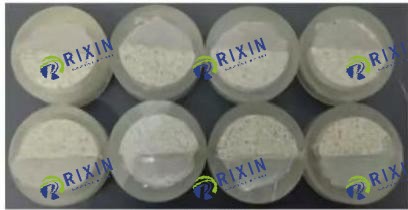
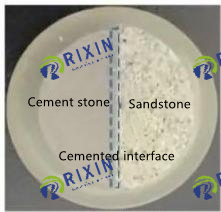
(a) Assembly specimen (b) End-face electron microscopy scan
Fig.5 Scanning of assembly specimens and end faces
2 Results and Discussion
2.1 Evaluation of the shear cement strength of the second interface
In order to ensure the accuracy of the experimental results, each group of experiments is divided into two samples, and the average value is taken as the shear cementing strength of the experimental conditions, and the experimental test results are shown in Table 1.
Table 1 Shear cement strength test results
| Maintenance2d | Maintenance7d | |||||
| Experiment condition | Rock Heart | Shear force/N | Cementing strength/ MPa | Rock Heart Shear force/N | Cementing strength/ MPa | |
| Do not wash | 9 | 61 | 0.0041 | 12 | 133 | 0.0090 |
| Filter cake | 11 | 74 | 0.0051 | 14 | 180 | 0.0122 |
| Wash with water | 7 | 431 | 0.0290 | 5 | 1079 | 0.0732 |
| Filter cake | 10 | 335 | 0.0228 | 6 | 785 | 0.0526 |
| Use an emulsifier | 15 | 2002 | 0.1354 | 17 | 3998 | 0.2738 |
| Wash the filter cake | 16 | 2659 | 0.1804 | 18 | 5251 | 0.3586 |
| No filter cake | 12 | 91938314 | 0.61850.5661 | 34 | 1558618000 | 1.06061.2037 |
According to the results of the shear cementation strength test, the strength of the cementation between the core and the cement stone is calculated as 100%, and the percentage of the cementing strength change on the second boundary surface of cementing under different experimental conditions is obtained, as shown in Table 2.
Table 2 Percentage change of cementing strength at the second interface of cementing
| Maintenance2d | Maintenance7d | |||
| Experiment condition | Average cementation strength/MPa | Intensity variations | Average cementation strength/MPa | Intensity variations |
| No filter cake | 0.5923 | 100% | 1.1322 | 100% |
| Do not wash the filter cake | 0.0046 | 0.78% | 0.0106 | 0.94% |
| Wash the filter cake with water | 0.0259 | 4.37% | 0.0629 | 5.56% |
| Wash the filter cake with an emulsifier | 0.1579 | 26.66% | 0.3162 | 27.93% |
When cementing was carried out with the filter cake attached to the surface of the rock sample, the shear cement strength decreased by 73.34%~99.22% in the 2d curing and 72.07%~99.06% in the curing 7d, indicating that the cementation quality of the second cementing interface decreased due to the presence of the filter cake. After cleaning the filter cake with clean water, the cementing strength of the curing 2d and 7D was increased by 5.60 and 5.91 times, respectively, compared with the cementation strength before cleaning. After cleaning with emulsifier, the curing strength of 2d and 7 increased by 34.18 and 29.71 times, respectively. It can be seen that the filter cake is effectively cleaned by water and emulsifier, the cementing strength of the second interface of the cementing is improved, and the cleaning effect of the filter cake with emulsifier is more significant, and the cementing quality is better.
2.2 Evaluation of acoustic parameters at the second interface
In order to reduce the experimental error, each specimen is tested in 5 different positions, and the average value is taken as the test result under the experimental conditions, see Fig. 6.
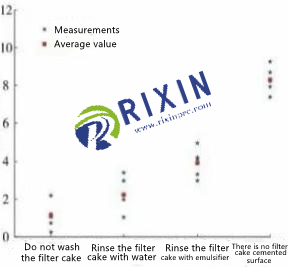
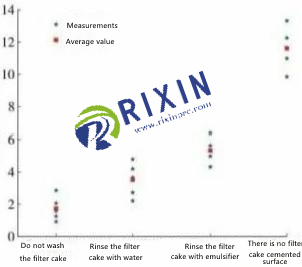
(a) Conservation 2d (b) Conservation 7d
Fig.6 The amplitude of the first wave at the second interface of cementing
As can be seen from Fig. 6, the amplitude of the first wave at the second interface of cementing increases with the decrease of the filter cake and increases with the increase of curing time. When cement stone is cemented with the formation, the first wave amplitude is the largest, and the curing 2 and 7 days are 8.3 and 11.6mV, respectively. With the increase of the filter cake on the cemented surface, the amplitude of the first wave gradually decreases. The cementing was carried out before the filter cake was cleaned, and the first wave amplitude was the smallest, which was 1.1 and 1.7mV, respectively. followed by cleaning the filter cake with water, which is 2.3 and 3.5mv, respectively; After cleaning with emulsifier, the amplitude of the first wave increased compared with the previous two, which was 3.9 and 5.3mV respectively. From the results of the longitudinal wave velocity experiment in Fig. 7, it can be seen that the longitudinal wave velocity of the cement ring increases with the decrease of the filter cake on the cemented surface, and increases with the increase of curing time.
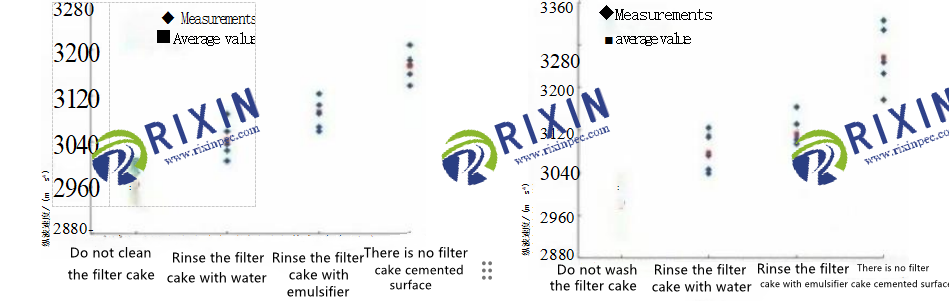
(a) Conservation 2d (b) Conservation 7d
In the state of no filter cake at the interface, the cement stone is directly cemented with the stratum, and the longitudinal wave velocity is the largest, and the wave velocity in curing 2 and 7 days is 3173 and 3257 m/s, respectively. The longitudinal wave velocity is the smallest when cementing is carried out before the filter cake is cleaned, which is 2967 and 2979 m/s, respectively, and then the filter cake is cleaned with water, which is 3043 and 3078 m/s, respectively, and after cleaning with emulsifier, the longitudinal wave velocity increases compared with the previous two, which is 3090 and 3112 m/s, respectively.
The results show that the more filter cakes on the cemented surface, the more reflection and refraction of sound waves will occur during the propagation process of the cemented surface, resulting in a large amount of energy being absorbed, making the attenuation of the first wave amplitude and longitudinal wave velocity more serious, and the cementation condition of the second interface is not good. On the contrary, the cleaner the cemented surface, the less number of sound wave reflection and refraction, the less energy absorbed, the higher the longitudinal wave velocity and first wave amplitude, the denser the cemented surface, and the better the cementation condition. Therefore, the quality of cementing at the second interface of the cementing well can be quantitatively evaluated according to the longitudinal wave velocity and the amplitude of the first wave.
2.3 Evaluation of the micromorphology of the second interface
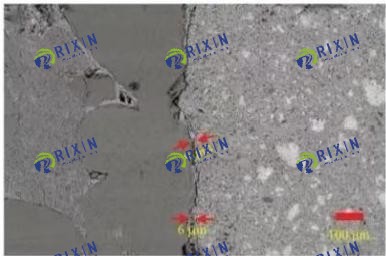
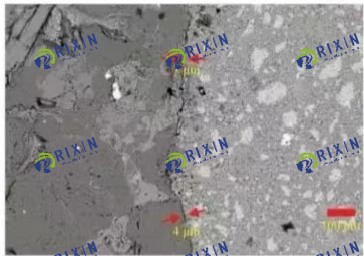
The microscopic morphology of the sandstone-cement stone cementation surface after 2 and 7 days of curing at 85°C is shown in Fig. 8, in which the left side of the cementation surface is sandstone, and the right side is cementite, and in the absence of filter cake, the cementation between sandstone and cement stone is tight, and the gap between the cementation interface is small, the curing 2d is about 6~9 μm, and the curing 7 days is about 4~7 μm, and the overall cementation is better, basically forming the overall cementation of sandstone-cement stone, so that the cementation strength of the second interface is greatly enhanced.
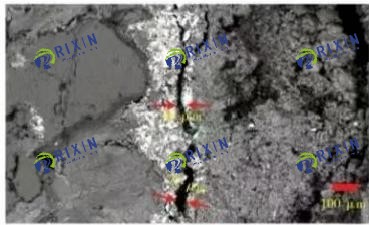
The morphology of the cement stone cemented surface (before the core of the filter cake attached to the filter cake) is magnified 300 times after 2 and 7 days of water bath curing at 85°C, as shown in Fig. 9.
(a) Conservation 2d (b) Conservation 7d
Fig. 9 Filter cake-cement stone cementation (before core flushing with filter cake attached)
There is a large crack on the cemented surface of the filter cake-cement stone, the curing 2d is 118~186μm, compared with the curing 2d, the crack width of the curing 7d is reduced, about 69~98 μm, the boundary between the two is clear, there are more holes and other defects at the cemented surface, and even serious separation phenomenon occurs. This is mainly due to the poor affinity between the filter cake and the cement stone, and the filter cake is only attached to the surface of the cement stone, resulting in no cementation between the filter cake and the cement stone. Therefore, cementing in the presence of filter cake will greatly reduce the cementing strength of the second cementing interface.
The microscopic morphology of the cement stone cement surface (the core attached to the filter cake is cleaned with water) by 300 times after curing in a water bath at 85°C for 2 and 7 days is shown in Fig. 10.
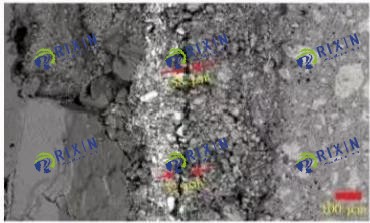
(a) Conservation 2d (b) Conservation 7d
Fig.10 Filter cake-cement stone cementation (the core attached to the filter cake is cleaned with water)
Compared with before the filter cake cleaning, after the core attached to the filter cake was cleaned with water, the crack width at the interface between the filter cake and the cement stone decreased, and the cementation condition was improved between 32~72μm.
The microscopic morphology of the cement stone cement surface (the core attached to the filter cake is cleaned with emulsifier) by 300 times after 2 or 7 days of water bath curing at 85°C is shown in Fig. 11.
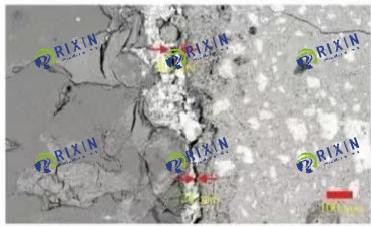
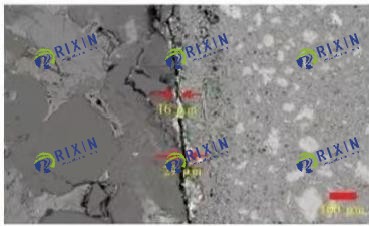
(a) Conservation 2d (b) Conservation 7d
Fig.11 Cement stone cementation of filter cake (the core attached to the filter cake is cleaned with emulsifier)
Compared with not cleaning the filter cake and cleaning the filter cake with water, the crack between the filter cake and the cement stone became significantly smaller after cleaning the filter cake with emulsifier.
The cemented surface is seamed between 16~40 μm. After the emulsifier is cleaned, the virtual filter cake layer is effectively rinsed, and the end face of the filter cake is flat and dense, with pores and cracks
The seams are significantly reduced, which increases the affinity between the cement stone and the filter cake, and the overall cementation of the filter cake and cement stone is formed on the basis, which enhances the cementing strength of the cementing second interface. The flushing mechanism of the emulsifier on the filter cake is as follows: the nonionic surfactant changes the wettability of the filter cake surface, reduces the surface tension of the filter cake, and quickly cleans the filter cake on the rock surface, so as to enhance the cementation strength of the second interface of the cement.
3 Conclusion
(1) When cementing was carried out with filter cake attached to the surface of the rock sample, the shear cement strength decreased by 73.34%~99.22% in the 2d curing and 72.07%~99.06% in the 7d curing period. After cleaning the filter cake formed by the loss of water in the drilling fluid with clean water and emulsifier, the cementing strength of the second interface of the cementing is improved.
(2) The first wave amplitude and longitudinal wave velocity of the cement ring increase with the decrease of the filter cake on the cemented surface, and increase with the increase of curing time. The more filter cakes on the cemented surface, the more reflection and refraction occur during the propagation of sound waves on the cemented surface, and a large amount of energy is absorbed, so that the longitudinal wave velocity and first wave amplitude are attenuated, and the cementing condition of the second interface of cementing is poor.
(3) The cemented transition zone of cement and formation rock is greatly affected by the degree of interface cleaning, and the cracks between the cemented transition zones gradually decrease with the increase of the degree of interfacial cleaning. cementing under the condition of filter cake will greatly reduce the cementing quality of the second cementing interface; Compared with curing 2d, curing 7d crack width is reduced.
(4) In order to improve the quality of the second interface of cementing, the well wall should be fully cleaned before cementing on site to eliminate or minimize the thickness of the filter cake, improve the environment of the second interface, and achieve the effect of improving cementing quality.
