Address
304 North Cardinal St.
Dorchester Center, MA 02124
Work Hours
Monday to Friday: 7AM - 7PM
Weekend: 10AM - 5PM
Address
304 North Cardinal St.
Dorchester Center, MA 02124
Work Hours
Monday to Friday: 7AM - 7PM
Weekend: 10AM - 5PM

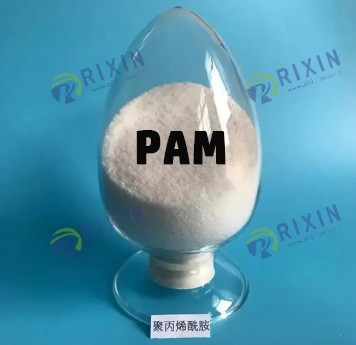
Polyacrylamide (HPAM) is a high-molecular-weight polymer obtained by homopolymerization of acrylamide or copolymerization of acrylamide with other monomers containing double bonds. The amide and carboxyl groups in the polymer units enable the polymer to readily form hydrogen bonds in water, resulting in excellent solubility and thickening properties. The polymer’s properties and functions in water are influenced by its molecular structure, leading to its selective application in industries such as oil extraction, papermaking, pharmaceuticals, and water treatment, earning it the nickname “all-in-one additive.” Currently, the most widely used polymers include pre-hydrolyzed polyacrylamide, partially hydrolyzed polyacrylamide, hydrophobically associating polyacrylamide, cationic polyacrylamide, and thermosensitive polyacrylamide.
1) Partially hydrolyzed polyacrylamide (HPAM) is mainly produced by homopolymerization of acrylamide followed by hydrolysis of the amide groups with alkali to form carboxyl groups. Its structure-activity relationship is mainly related to the polymer molecular weight and degree of hydrolysis, including a positive correlation between the apparent viscosity of the solution and the molecular weight, with the solution viscosity increasing with increasing degree of hydrolysis. This type of polymer is widely used in oil displacement applications, increasing solution viscosity and improving the injection sweep area by increasing the polymer molecular weight. Cheng Yanzhao et al. prepared HPAM with a molecular weight of 2.5 × 10⁷ using a post-hydrolysis method, and the degree of hydrolysis could be adjusted within a certain range. The carboxyl groups on the HPAM molecule are easily coiled by the electrostatic shielding effect of charged cations, leading to decreased shear resistance and molecular degradation. It is not suitable for high-temperature, high-salinity oil reservoirs and offshore oil fields.
2) Pre-hydrolyzed polyacrylamide is formed by copolymerizing acrylamide, acrylic acid, etc. During copolymerization, 2-acrylamido-2-methylpropanesulfonic acid (AMPS) is added to improve the polymer’s salt resistance. Its structure-activity relationship is mainly related to the polymer molecular weight and degree of hydrolysis. The apparent viscosity of the solution is positively correlated with the molecular weight. As the proportion of acrylic acid increases, the solution viscosity increases, elasticity decreases, and salt resistance increases with increasing AMPS content. This type of polymer is mainly used in oilfield fracturing fluids, papermaking, and mineral flotation. By increasing the molecular weight and AMPS content, the salt resistance of the solution is improved, adapting to the requirements of solution preparation under high-salinity water conditions. Liu Guanjun, Chen Shijia, and others copolymerized AM/AA/AMPS as monomers to synthesize a seawater-based fast-dissolving polymer. By controlling the microblock structure of AA, the dissolution rate of the polymer was improved, and AMPS, as a salt-resistant monomer, improved the salt resistance. The polymer showed good solubility in seawater formulations and has been successfully applied in oil displacement.
3) Hydrophobic Associating Polyacrylamide: Evani and Rose proposed the theory of hydrophobic associating polyacrylamide. Hydrophobic associating polyacrylamide is produced by copolymerizing and grafting a long-chain hydrophobic surfactant during polymerization. These long hydrophobic carbon chains can undergo associative self-aggregation in aqueous solutions, resulting in unique solution properties. The self-aggregation of hydrophobic microdomains leads to the formation of an interlaced three-dimensional network structure in the polymer molecular chain aggregate state, exhibiting significant thickening and salt resistance. Simultaneously, due to the long carbon chains of the hydrophobic surfactant, there is significant steric hindrance and strong polymerization inhibition, resulting in a lower molecular weight and stronger shear resistance. This type of polymer is increasingly used in oilfield volumetric fracturing. Schleiting et al. studied the salt resistance of hydrophobic associating “cluster” and “chain bundle” polymers, using atomic force microscopy, rheology, and scanning electron microscopy to investigate the relationship between polymer microstructure and properties. The results showed that “chain bundle” polymers have a stronger spatial network connection structure than “cluster” polymers, which can improve the polymer’s salt resistance.
Jiang Zhuyang et al. synthesized a nonionic hydrophobic monomer using nonylphenol polyoxyethylene ether and allyl chloride, and then polymerized it with AM/AA to form a hydrophobic associative polymer (TXPAM). The polymer has a lower low association concentration and better salt resistance, providing a direction for the modification of polyacrylamide with nonionic hydrophobic monomers. Su Gaoshen et al. introduced a surfactant into the polymer chain to obtain a hydrophobic associative polyacrylamide with strong oil displacement and emulsification capabilities.
Pitt et al. synthesized a hydrophobic nanopolymer using heterogeneous polymerization and micellar polymerization. Through rheological property comparison, they proved that the introduction of hydrophobic monomers can significantly improve the polymer’s temperature resistance, salt resistance, and shear resistance.
Zhao Qingmei et al. synthesized a fluorinated hydrophobic associative polymer using AM/AMPS as a water-soluble monomer and heptadecafluorodecane acrylate as a hydrophobic monomer. The polymer not only has stronger thickening and temperature resistance, but the fluorinated functional monomers also give it more functional properties in solution.
4) Temperature-resistant polyacrylamide: Research by Zhao Fangyuan et al. found that rigid molecular structures possess certain temperature and shear resistance. Therefore, more and more researchers are attempting to graft rigid cyclic functional monomers, such as vinylpyrrolidone (NVP), β-cyclodextrin, and styrene, onto polymer molecular chains. Rigid cyclic functional monomers can enhance the spatial tension of polymer molecules and increase the viscous flow activation energy, thereby improving the temperature and shear resistance of polymers.
Xu et al. synthesized copolymers using AM/NVP as monomers and analyzed the thermal stability of the copolymers using thermogravimetric analysis. The results showed that NVP can inhibit amide hydrolysis and enhance the stability of copolymer molecules. Moradi Araghi et al. compared the thermal stability of AM/AMPS and AM/NVP copolymers at 120℃. The results showed that AM/AMPS was completely dehydrated after 30 days of copolymerization, while the AM/NVP copolymer was 80% hydrolyzed after 100 days, exhibiting greater thermal stability.
5) Cationic Polyacrylamide: Acrylamide is copolymerized with methacryloyloxyethyltrimethylammonium chloride (DMC) or acryloyloxyethyltrimethylammonium chloride (DAC) to form cationic polyacrylamide, which is often used as a flocculant in water treatment or as an acid thickener. Its performance is related to the content of cationic monomers in the polymer, i.e., the degree of cationicity. Wang et al. used a photoinitiator and AM/DAC as monomers to synthesize a cationic polymer as a flocculant, which showed good flocculation effect on coal slurry. Cheng et al. used reverse emulsion polymerization to synthesize a thermosensitive polymer with AM/DMC as monomers and evaluated its flocculation performance.
6) Thermosensitive Polyacrylamide: Acrylamide can be copolymerized with N-isoallylacrylamide, polyvinyl alcohol-vinyl acetate, hydroxypropyl cellulose (HPC), etc., to synthesize a thermosensitive polymer. This polymer exhibits a strong response to temperature and can be used as a smart material in biomedicine, molecular templates, and other fields.
Liu et al. synthesized thermosensitive polymer fibers using N-isoallylacrylamide and methacrylic acid (MAA) as monomers via free radical aqueous solution polymerization, and studied their release performance for pre-embedded drugs. Their research showed that the polymer fibers can be used as thermoresponsive materials for drug delivery. Gu et al. synthesized thermoresponsive gels using MEO, MA, and OEGMA300 as monomers and applied them to cotton fabrics, demonstrating good antibacterial and breathable properties.
7) Structure-activity relationship of acrylamide polymers: According to literature review, acrylamide can be polymerized with different monomers to obtain different types of polyacrylamides. Based on the polymer’s properties in aqueous solution, it can be selectively applied to different fields, as shown in Tables 1-4.
Tab.1-4 Typical polymer structure-activity relationships
| Polymer monomer (structure) | Typical polymers | Performance Applications | |
| AM | AA | Partially hydrolyzed polymers | Oil displacement |
| AA/AMPS and other sulfonic acid groups | Pre-hydrolysis salt-resistant polymers | Papermaking and mineral processing | |
| Long-chain hydrophobic monomers | Hydrophobic Associating Polymers | fracture | |
| NVP and other rigid groups | Temperature and shear resistant polymers | fracture | |
| Cation-ion DMC/DAC, etc. | cationic polymers | Water treatment | |
| PNIPAAM/HPC/PVA, etc. | Thermosensitive polymer | Biomedicine |
