Address
304 North Cardinal St.
Dorchester Center, MA 02124
Work Hours
Monday to Friday: 7AM - 7PM
Weekend: 10AM - 5PM
Address
304 North Cardinal St.
Dorchester Center, MA 02124
Work Hours
Monday to Friday: 7AM - 7PM
Weekend: 10AM - 5PM

It is short for the first letter of Sodium lauryl ether sulphate
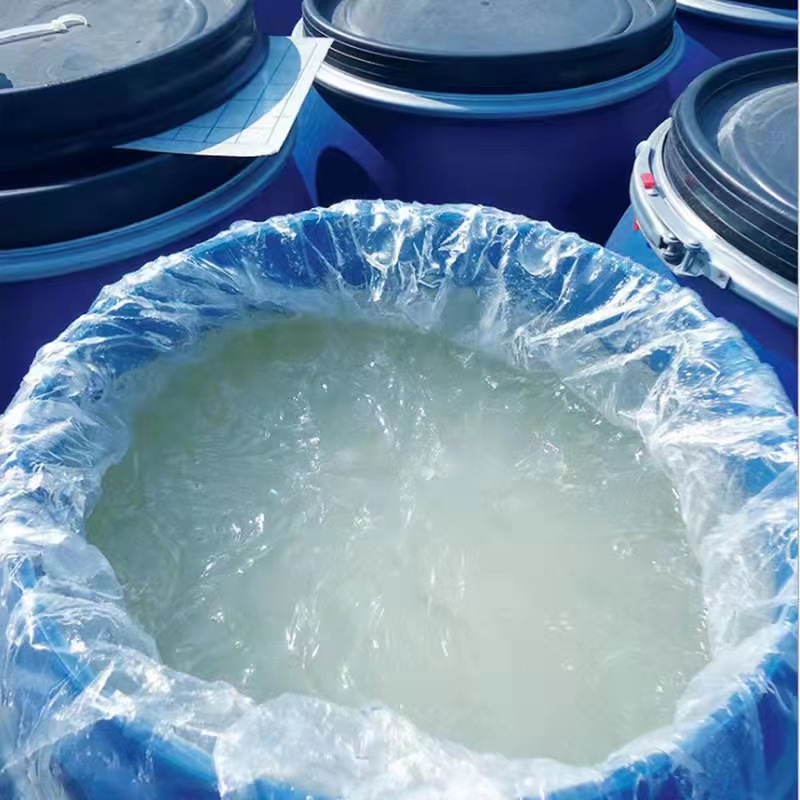
Sodium Lauryl Ether Sulfate (SLES) is a surfactant that is commonly used as the main ingredient in detergents and cleaners.
Manufacturing process: SLES are usually extracted from coconut oil or petrochemical raw materials and obtained through chemical reactions such as etherification and sulfuric acid esterification.
Environmental impact: At high concentrations, SLES may produce certain toxicity to aquatic organisms, so environmental friendliness needs to be paid attention to in product formulation and production.
Sodium Lauryl Ether Sulfate (SLES) is a synthetic surfactant that belongs to the sulfate ether class of surfactants and is commonly used as the main ingredient in cosmetics, personal care products, and cleaners.
The chemical structure of SLES consists of an alkyl chain and an ether chain with the general formula C12H25(OCH2CH2)nOSO3Na. This structure gives it excellent surface activity and emulsification properties.
It has good water solubility and can quickly form a rich foam in water.
It has good foaming performance, good cleaning power and deterring power, and can also maintain the stability of the product.
SLES are usually prepared by etherification and sulfation of coconut oil or petroleum-based substances. This process involves reacting a fatty alcohol with ethylene oxide to form an ether chain, which is then esterified by sulfuric acid to produce the final SLES product.
SLES is a versatile surfactant used in a wide range of personal care and cleaning products, including:
Shampoo: SLES is one of the main ingredients of shampoo, which provides superior cleaning and foaming properties while helping to remove oils and impurities from the hair.
Conditioner: In conditioner, SLES can be used to provide smoothness and help disperse the ingredients in other formulas, making hair easier to comb and manage.
Body wash: SLES acts as the main surfactant in body wash to provide good cleansing and lather for the skin, making bathing a pleasurable experience.
Hand sanitizer: Because of its cleaning and foaming properties, SLES is often used in the manufacture of hand sanitizers to make hand washing a more efficient and hygienic process.
Soap: SLES is a common ingredient in soap that helps remove dirt and oil from the skin while creating a rich foam.
Detergents: SLES is also widely used in household cleaning products, such as dish washing liquid, laundry detergent and multi-purpose cleaners.
Toothpaste: SLES can be used in toothpaste to provide cleaning and foamy properties that help remove food debris and bacteria from the mouth.
Industrial cleaners: In some industrial applications, SLES is also used as an ingredient in cleaning agents, such as car cleaners and industrial surface cleaners.
Cleaning power: SLES has excellent decontamination and cleaning properties, which can effectively remove grease and dirt.
Foam: Generate rich foam to enhance the user’s experience.
Emulsification: can effectively emulsify grease, so that it is dispersed in water, easy to wash.
Compatibility: Good compatibility with other ingredients and formulations, easy to prepare various products.
Although the use of SLES in products is very common, it can cause skin irritation at high concentrations, so concentrations in personal care products are usually evaluated for safety. In terms of environmental protection, SLES is biodegradable in water, but its preparation process and use need to pay attention to environmentally friendly production and use.
1, easily soluble in water, with excellent decontamination, emulsification, foaming properties and hard water resistance, mild washing properties will not damage the skin.
2, both non-ionic and anionic surfactants have some characteristics, its solubility, hard water resistance, foaming and wetting power are better than alkyl sulfate, and low irritation, thus becoming the second largest anionic surfactant after LAS.
3, fatty alcohol polyoxyethylene ether sodium sulfate non-ionic surfactants in the fastest developing, the largest variety. This type of surfactant is an ether formed by condensation of polyethylene glycol (PEG) and fatty alcohol, expressed by the following general formula: RO (CH2CH2O) nH, where n is the degree of polymerization, there are different varieties due to the degree of polymerization of polyethylene glycol and the type of fatty alcohol.
4, aliphatic alcohol ether sulfate sodium sulfate -AES has ethoxy and sulfonic acid groups, and has anionic surfactant and non-ionic surfactant characteristics, has good resistance to hard water and emulsification ability, and is easy to inorganic salt thickening. AES has excellent hard water resistance and emulsification ability, while gentle on the skin, so it is favored in the field of daily chemical.
However, its acid resistance is general, and the PH needs to be controlled at much higher than 4 in order to play a better role, and the deactivation ability is second only to LAS.
SLES generally comply with relevant industry standards and regulations, such as the US FDA (Food and Drug Administration) and European Cosmetic regulations.
Ii. Content
1.SLES (Sodium Lauryl Ether Sulfate) common specifications in the market mainly include SLES 70% and SLES 28%
SLES 70% is commonly used
2.SLES 28% is a surfactant with an active ingredient content of 28%, mainly derived from coconut oil or fatty alcohols. This specification of SLES is milder than the high SLES 70% and is therefore commonly used in the manufacture of baby care products, sensitive skin products and some everyday cleaners. Here are some of the main features and uses of 28% of SLES:
SLES ‘relatively low active ingredient content of 28% makes it gentler and suitable for use in baby care products and sensitive skin products with lower irritation requirements.
Baby Care Products:
It is often used in the manufacture of baby shampoo, baby shower gel and other products to ensure a gentle and gentle cleaning effect on baby’s tender skin.
Sensitive Skin Care:
Care products such as hand sanitizers and lotions for sensitive skin provide cleansing while reducing irritation.
Daily cleaner:
It is used in some daily cleaners, such as hand sanitizer and dishwashing liquid, to provide a gentle and effective cleaning experience for daily life.
Blending ingredients:
SLES 28% can be used in combination with other surfactants, emulsifiers and additives to harmonize product performance and achieve specific product requirements.
Foam properties:
Although the foam performance is relatively low compared to SLES 70%, SLES 28% still provides enough foam to make the product feel good in use.