Address
304 North Cardinal St.
Dorchester Center, MA 02124
Work Hours
Monday to Friday: 7AM - 7PM
Weekend: 10AM - 5PM
Address
304 North Cardinal St.
Dorchester Center, MA 02124
Work Hours
Monday to Friday: 7AM - 7PM
Weekend: 10AM - 5PM

Xanthan gum is a kind of white or light yellow powder, is currently the world’s thickening, suspension, emulsification, stability in one, the performance is relatively superior biological glue. The number of pyruvate groups in the end of the molecular side chain has a great influence on its performance. Xanthan gum has the general properties of long chain polymers, but it contains more functional groups than ordinary polymers, and will show unique properties under certain conditions. It is a polyanion in aqueous solution and its conformation is diverse. It shows different characteristics under different conditions and has unique physical and chemical properties.
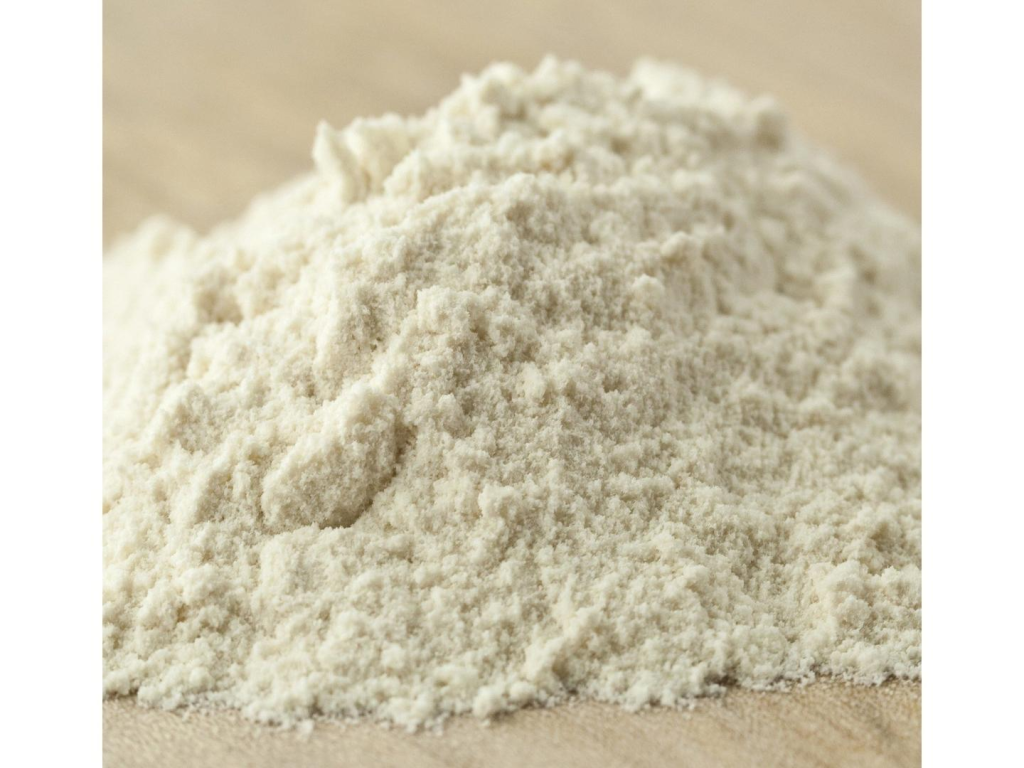
The specific performance is as follows:
1. Suspension and emulsification
Xanthan gum is often used in food and other products to improve the stability of O/W emulsions due to its significantly increasing system viscosity and forming a weak gel structure. However, Ma Jianguo et al. [5] found that only when the amount of xanthan gum added reached a certain amount, the predetermined stabilizing effect could be obtained. When the mass fraction of xanthan gum is less than 0.001%, the stability of the test system has little change. When the mass fraction is 0.01 ~ 0.02%, the water-rich layer appears at the bottom of the sample, but there is no obvious stratification. When the mass fraction is greater than 0.02%, the emulsion is quickly stratified. Only when the mass fraction exceeds 0.25%, xanthan gum can improve the stability of the system.
2. Water Solubility
Xanthan gum dissolves quickly in water and has good water solubility. Especially in cold water can also be dissolved, can eliminate the complicated heating process, easy to use.
3. Rheology
That is, thixotropic or pseudoplastic, when the aqueous solution of xanthan gum is subjected to shear, the viscosity drops sharply, and the higher the shear rate, the faster the viscosity drops, such as 6r/min, the mass fraction of 0.3% Xanthan adhesive viscosity is 1300 mPa.s, while 60r/min, its viscosity is only 400 mPa.s, less than one third of the original. When the shear force is eliminated, the original viscosity is immediately restored. The relationship between shear force and viscosity is completely malleable. When xanthan gum is mixed with nanocrystalline cellulose, high strength all-natural biogel can be formed in water, and its thixotropy becomes stronger.
4. Thermal stability
General polysaccharides will change viscosity due to heating, but the aqueous solution of xanthan gum has almost no change in viscosity between 10 and 80℃, even if the aqueous solution with low concentration still shows a stable high viscosity over a wide temperature range. Xanthan gum solution is repeatedly heated and frozen in a certain temperature range (-4 ~ 93℃), and its viscosity is almost unaffected.
5. Acid-base stability
Xanthan gum solution is very stable to acid and base and can be used under both acidic and alkaline conditions. The viscosity of xanthan gum solution remains almost constant between pH 2 and 12. Although xanthan gum gradually deacetylates when pH is equal to or greater than 9, the pyruvate group is also lost at pH less than 3. However, both deacetyl and pyruvate groups have little effect on the viscosity of xanthan gum solution. That is, the viscosity of xanthan gum solution is relatively stable in the PH2-12 range, so xanthan gum is a good choice for mixtures containing high concentrations of acids and bases.
6. Enzyme stability
Ordinary microbial or industrial enzymes such as protease, cellulase, pectinase, amylase have no effect on xanthan gum.

Xanthan gum is used in the petroleum industry as a flow control agent for drilling fluids, completion fluids and fracturing fluids, as well as to increase the flow control of oil recovery operations. In these applications, Xanthan gum is of particular importance for increasing the viscosity of highly saline solutions, and its pseudoplasticity can improve the flow control of water and increase the efficiency of bottom-hole cleaning during oil displacement.
Oil drilling grade xanthan gum is an efficient, high-quality and environmentally friendly oil drilling mud additive with a wide range of applications and strong tolerance to temperature, acid, alkali and salt. It can significantly improve the permeability of mud and the ability to suspend solid substances, reduce the pressure in the drilling process, stabilize the well wall and reduce the damage to the oil reservoir. Thus, the efficiency of drilling, workover and completion can be significantly improved. This product has a good mud additive. In saturated salt water and 85℃ temperature, it can remain stable for a long time. Therefore, it is an ideal displacement agent for high temperature and high salt oil fields.
