Address
304 North Cardinal St.
Dorchester Center, MA 02124
Work Hours
Monday to Friday: 7AM - 7PM
Weekend: 10AM - 5PM
Address
304 North Cardinal St.
Dorchester Center, MA 02124
Work Hours
Monday to Friday: 7AM - 7PM
Weekend: 10AM - 5PM

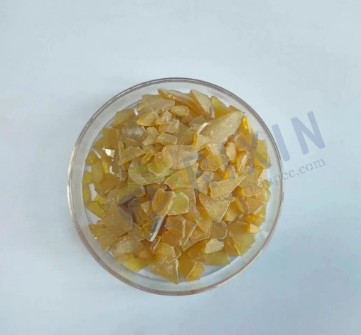
Chemical sand control technology can simplify the wellbore to the greatest extent possible while preserving the flow capacity of perforations and tubing. Traditional chemical sand control technologies use binders such as phenolic resin, urea-formaldehyde resin, epoxy resin, and furan resin to strengthen the surrounding formation and restore the strength of the rock matrix. However, these technologies also suffer from problems such as severely reduced reservoir permeability and uneven injection of high-viscosity systems, which limits their application. For chemical sand control wells with multiple oil layers, long well sections, and significant interlayer differences, uneven injection of the reagents can lead to low treatment efficiency and a significantly shortened sand control period.
Fault-block reservoirs occupy an important position in the Shengli oilfield and are currently generally in the high water-cut development stage. The interlayer physical properties of fault-block reservoirs vary greatly. Furthermore, long-term water injection scouring exacerbates these differences, and the intralayer framework is severely damaged, necessitating the reconstruction of a stable sand-block barrier to achieve precise and long-term sand control. Therefore, this paper specifically studies a precise layered sand control technology combining “intralayer low-viscosity surfactant sand fixation + interlayer layered tubing sand control.” A water-soluble low-viscosity surfactant sand fixation system was prepared, and the injection performance and influencing factors of the sand fixation performance were investigated. Based on this, and using a layered chemical sand control process tubing, selective layered injection of sand fixation agent was achieved in a single tubing run, overcoming the problem of uneven interlayer injection of sand control agents. This is of great significance for precise chemical sand control in complex fault-block reservoirs.
1. Preparation of the Low-Viscosity Surfactant Sand Fixation System
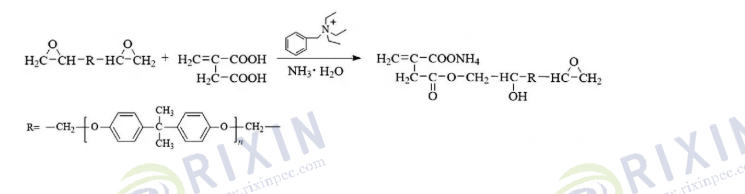
Methylene succinic acid was placed in a four-necked flask connected to a stirrer, reflux condenser, and thermometer. A suitable amount of xylene was added and stirred thoroughly to dissolve the acid. A small amount of hydroquinone, a double bond inhibitor, was then added. A small amount of benzyltriethylammonium chloride catalyst was added to the reaction system, and the temperature was slowly raised to 80°C. A mixed solution of epoxy resin and xylene was slowly added dropwise to the flask, and the temperature was gradually raised to 110°C. The reaction was maintained at this temperature for 3 hours. After cooling to room temperature, a small amount of ammonia was added to adjust the pH of the system to a weakly alkaline state, thus obtaining the modified epoxy resin. The reaction mechanism is shown in Figure 2.
At room temperature, the prepared modified epoxy resin, ethylenediamine, and water were compounded to obtain a low-viscosity surfactant sand-fixing system.
Figure 2. Preparation route of modified epoxy resin
2. Flowability and dispersion characteristics of low-viscosity surfactant-based sand-fixing systems
Figure 3 shows the viscosity of a low-viscosity surfactant-based sand-fixing system with 10% modified epoxy resin and 1% ethylenediamine content as a function of shear rate at different temperatures. At the same shear rate, the viscosity of the sand-fixing system continuously decreases with increasing temperature. At 25℃, the viscosity of the low-viscosity surfactant-based sand-fixing system is only 4.5 mPa·s, exhibiting good fluidity.
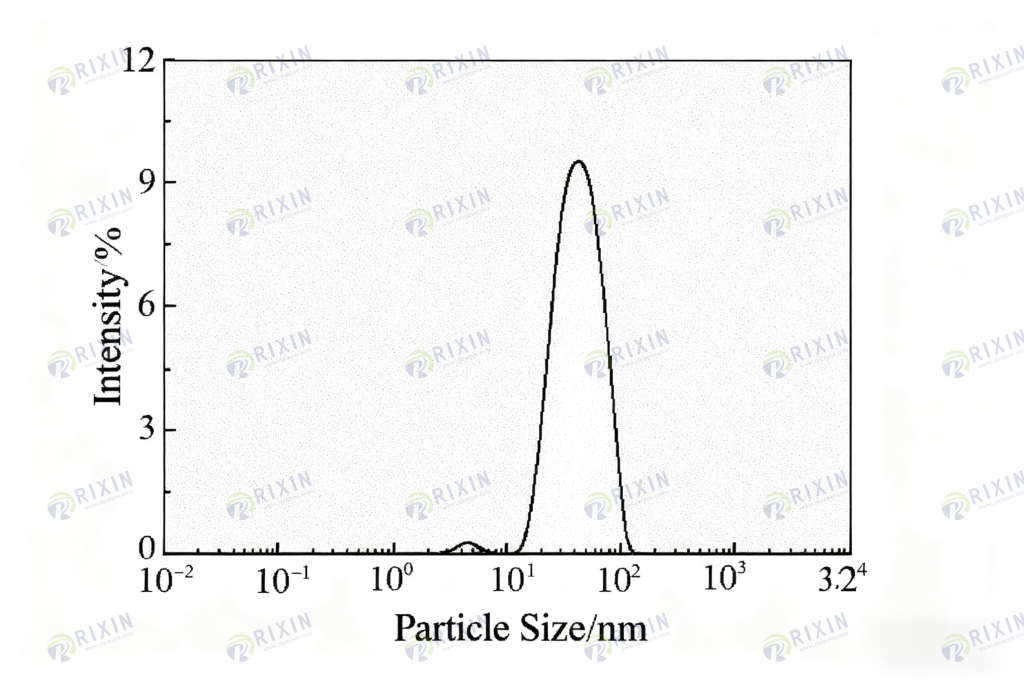
The particle size distribution of the sand-fixing system is shown in Figure 4. As can be seen from Figure 4, the low-viscosity surfactant sand-fixing system exhibits good water solubility, with the particle size distribution mainly concentrated in the 10–100 nm range. The sand-fixing system possesses low viscosity and small dispersion size, thus enabling it to penetrate deeply into the gravel-filled layer.
Figure 3. Viscosity of the sand-fixing system as a function of shear rate
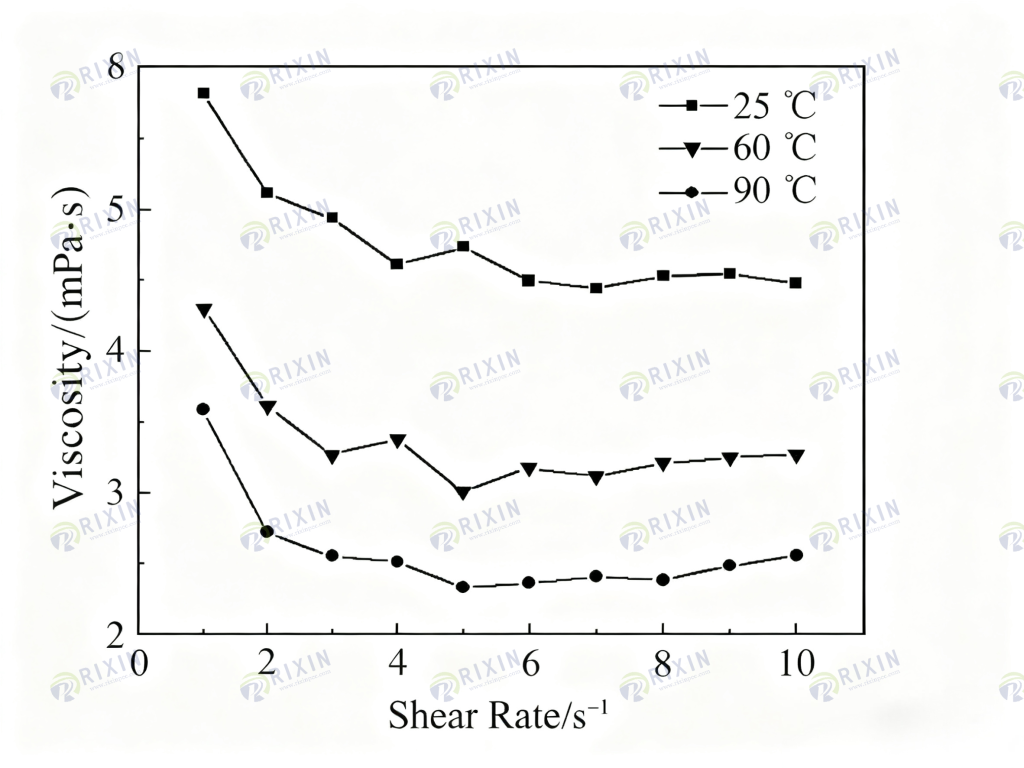
Figure 4. Particle size distribution of the sand-fixing system
3. Factors Affecting Sand Consolidation Performance
3.1 Effect of Modified Epoxy Resin Dosage
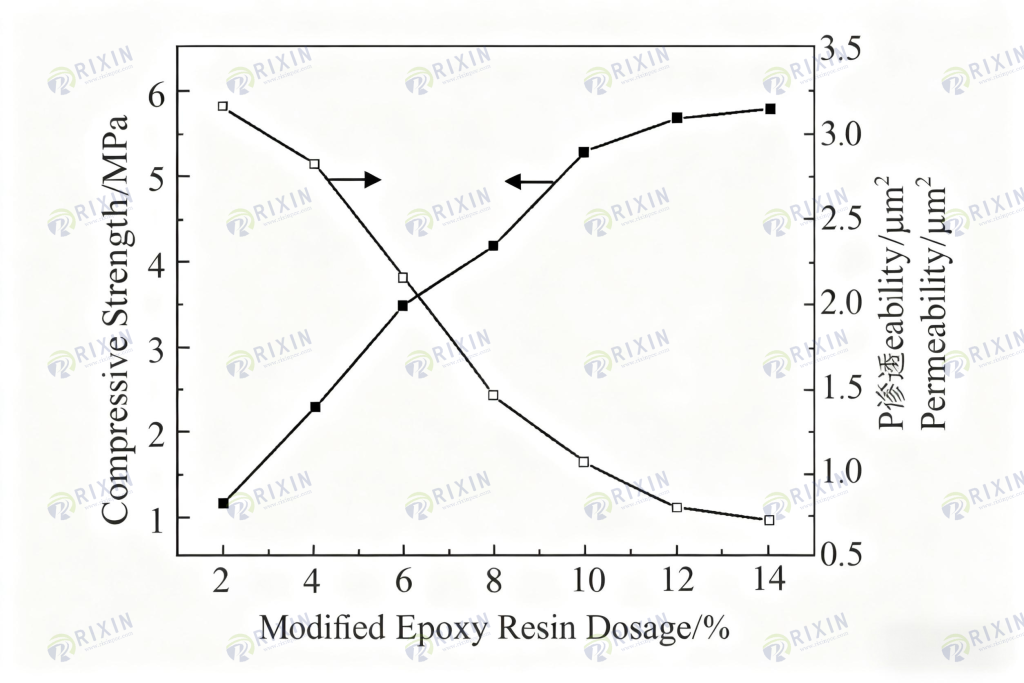
The design of sand consolidation agent systems needs to consider the balance between the consolidation strength and permeability of cemented cores [15-16]. Sand consolidation agent systems with modified epoxy resin dosages of 2%, 4%, 6%, 8%, 10%, 12%, and 14% (ethylenediamine dosage of 1%) were prepared. After consolidation, the compressive strength and permeability of the cemented cores were tested, and the results are shown in Figure 5. The consolidation time was 72 h, and the consolidation temperature was 60℃. With the increase of modified epoxy resin dosage, the compressive strength of the cemented cores continuously increased, while the permeability gradually decreased. When the modified epoxy resin dosage was >10%, the permeability of the cemented cores dropped below 1 μm2. Considering economic factors, cementation strength, and reservoir damage, the optimal solid content of modified epoxy resin in the sand consolidation agent system was 10%. Under these conditions, the compressive strength of the cemented cores was 5.3 MPa, and the permeability was 1.1 μm2, which met the requirements for sand consolidation agent testing.
Figure 5. Effect of modified epoxy resin dosage on compressive strength and permeability.
3.2 Effect of consolidation temperature and consolidation time
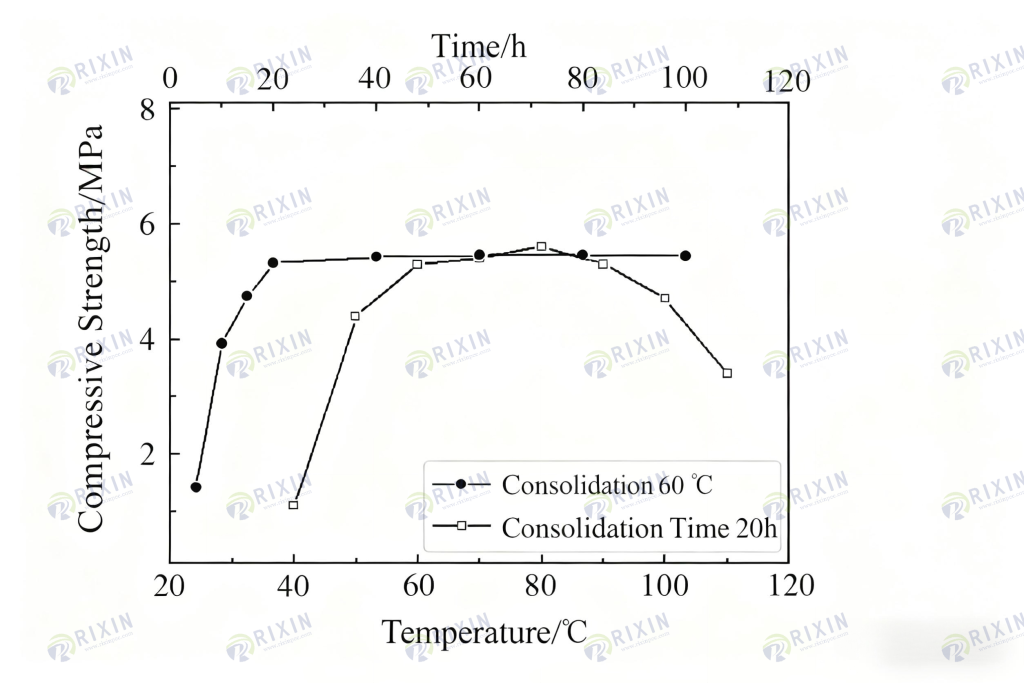
The curing process of epoxy resin is a chemical crosslinking process, and the reaction process is affected by temperature and time [17]. As shown in Figure 6, the reaction degree increases with the extension of reaction time and then tends to equilibrium. Under the condition of 60℃, the solidification time of the sand-fixing agent system is 20 h. When the solidification time is set to 20 h, the reaction rate increases with the increase of solidification temperature, the crosslinking reaction accelerates, and the compressive strength of the cemented rock core increases continuously within the same time. When the solidification temperature is >90℃, due to the excessively high crosslinking rate, the uneven local crosslinking leads to a slight decrease in the overall compressive strength of the cemented rock core. Therefore, the suitable curing temperature for the sand-fixing agent system is 50~90℃.
Figure 6. Effect of consolidation temperature and curing time on compressive strength
3.3 Dynamic erosion resistance
Highly effective sand control requires not only that the sand control agent effectively prevents sand particles from migrating into the wellbore, but also that it has a long shelf life to avoid frequent well workover operations. For chemical sand control agents, the sand control agent must maintain high stability for extended periods in humid and hot formation environments. Therefore, a continuous scour test was designed to investigate the dynamic anti-aging performance of the sand control agent system.
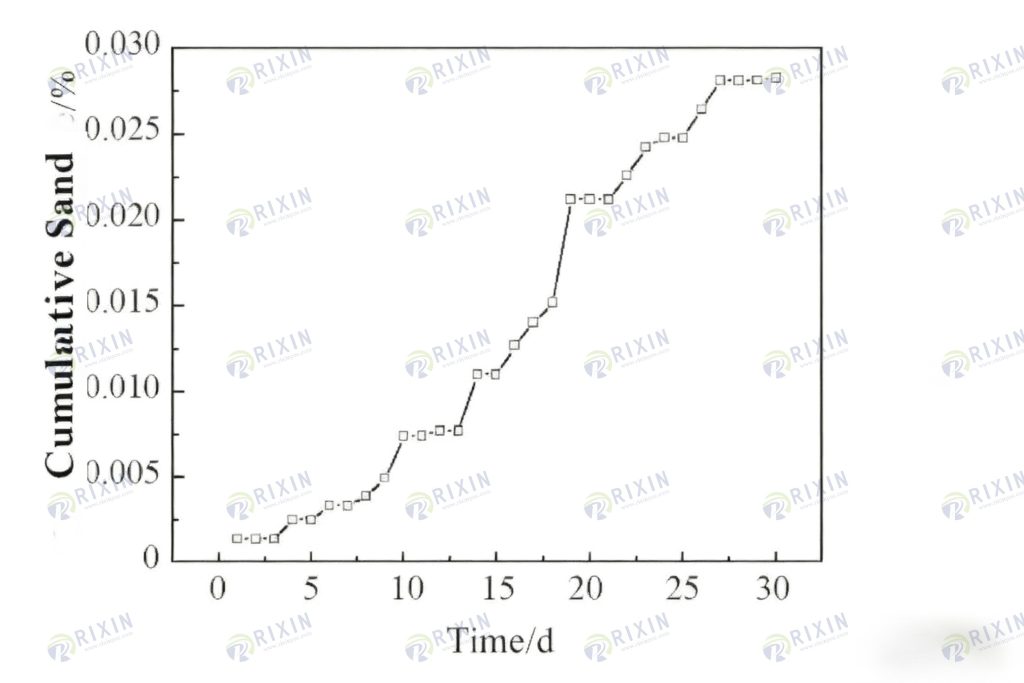
Continuous scouring tests were conducted on freshly prepared cemented core samples. The change in sand yield over scouring time is shown in Figure 7. The scouring flow rate was 30 mL/min, and the experimental temperature was 60℃. As shown in Figure 7, after 30 days of continuous scouring, the cumulative sand yield was only 0.0282%, indicating that the sand-fixing agent system has good dynamic scouring resistance.
Figure 7 Dynamic sand output curve
3.4 Cementation State Analysis
After the sand-stabilizing agent has penetrated and adsorbed within the gravel-filled layer, the pores in the matrix are filled with brine, the pore throats open, and the reservoir permeability gradually recovers. This argument can be confirmed by microscopic images of the cemented core. As shown in Figure 8, after the sand-stabilizing agent is adsorbed onto the surface of the sand grains, it forms the quartz sandstone through chemical cross-linking. The pores between the sand grains are open, ensuring the permeability of the cemented core.
4. Field Application Effects
50 wells at the Shengli Oilfield’s Gudao and Linpan oil production plants . After implementation, daily fluid production increased by 23% , and daily oil production increased by 35% . The average sand control effectiveness period is 720 days , significantly extending the lifespan and improving efficiency compared to the general chemical sand control used in multi-layered wells (effective for 200 days ). Well A, a typical example, has maintained stable production for over 2700 days after the implementation of three layers of chemical sand control, with a daily fluid production of 52.4 m³ and a daily oil production of 5.3 t , demonstrating a substantial increase in effectiveness.
5. Conclusion
To address the issues of strong heterogeneity and uneven injection of chemical sand control agents in loose sandstone fault block reservoirs, a low-viscosity activator sand fixation system has been developed. This system has the advantages of low viscosity and easy pumping, enabling it to penetrate deep into the formation and effectively treat the matrix. It can form high-strength consolidation with relatively low resin dosage.
Based on the layered chemical sand control process tubing string, the sand-fixing agent can be injected in layers in a single tubing run, improving the uniformity of fluid injection into each sub-layer. Field test results show that the “intra-layer low-viscosity surfactant sand fixation + inter-layer layered tubing string sand control” technology can significantly improve the daily oil production, daily fluid production, and effective period of sand control wells, with significant life extension and efficiency enhancement effects.
