Address
304 North Cardinal St.
Dorchester Center, MA 02124
Work Hours
Monday to Friday: 7AM - 7PM
Weekend: 10AM - 5PM
Address
304 North Cardinal St.
Dorchester Center, MA 02124
Work Hours
Monday to Friday: 7AM - 7PM
Weekend: 10AM - 5PM

Polyacrylamide (PAM) is a linear water-soluble polymer, is one of the most commonly used agents in our sewage treatment, no one! In our practical application PAM is divided into cationic, anion and non-ionic three types, how to choose these three types of PAM, to start from the difference!
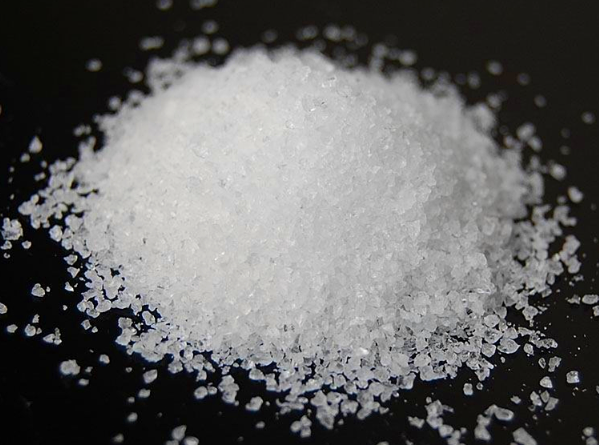
Difference of PAM.
1. Structural differences
Cationic polyacrylamide (CPAM) : is a linear polymer compound, because it has a variety of active groups, and many substances can be affinity, adsorption to form hydrogen bonds. It mainly flocculates negatively charged colloids.
Anionic polyacrylamide (APAM) : is a water-soluble polymer, mainly used in various industrial wastewater flocculation settlement, precipitation clarification treatment, such as steel mill wastewater, electroplating plant wastewater, metallurgical wastewater, coal washing wastewater and other sewage treatment, sludge dehydration. Can also be used for drinking water clarification and purification treatment. Because its molecular chain contains a certain number of polar groups, it can adsorb the solid particles suspended in water, bridge the particles or condense the particles through charge neutralization to form a large flocculant, so it can accelerate the settlement of particles in the suspension, has a very obvious speed up the clarification of the solution, promote filtration and other effects.
Nonionic polyacrylamide (NPAM) : It is a high molecular polymer or polyelectrolyte, and its molecular chain contains a certain amount of polar genes that can adsorb solid particles suspended in water, so that the particles form a bridge to form a large flocculant. It accelerates the settlement of particles in the suspension, has a very obvious speed up the clarification of the solution, and promotes filtration and other effects. Because the molecular chain contains amide or ion genes, it is significantly characterized by high hydrophilicity, can be dissolved in water in various proportions, polyacrylamide aqueous solution has a good tolerance for electrolytes, such as chlorinated amine, sodium sulfate, and other insensitive, compatible with surfactants.
2. Use difference
Non-ionic polyacrylamide uses
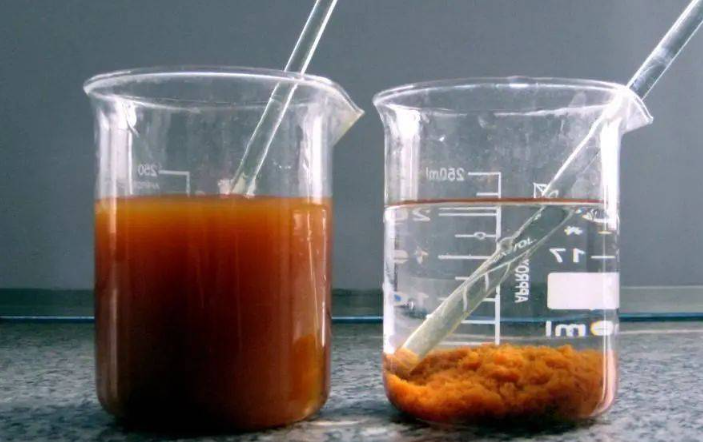
Sewage treatment agent: When the suspended sewage is acidic, the use of non-ionic polyacrylamide and flocculant is more appropriate. This is the PAM adsorption bridge function, so that the suspended particles produce flocculation precipitation, to achieve the purpose of purifying sewage. It can also be used for the purification of tap water, especially in combination with inorganic flocculants, which has the best effect in water treatment.
Textile industry additives: adding some chemicals can be matched into chemical materials for textile sizing.
Anti-sand fixation: The non-ionic polyacrylamide dissolved into 0.3% concentration and added crosslinking agent, spraying on the desert can play a role in preventing sand fixation.
Soil humectant: used as soil humectant and various modified polyacrylamide basic raw materials.
Use of cationic polyacrylamide
Sludge dewatering: The corresponding brand of this product can be selected according to the nature of the pollution, which can effectively dehydrate the gravity sludge before the sludge enters the press filtration. When dewatering, it produces large floc, non-stick filter cloth, does not disperse when pressing filter, less dosage, high dehydration efficiency, and the moisture content of mud cake is below 80%.
Sewage and organic wastewater treatment: This product is positive in acidic or alkaline media, so it is very effective to flocculate and precipitate the sewage with negative charge of suspended particles in sewage, such as alcohol factory wastewater, brewery wastewater, MSG factory wastewater, sugar factory wastewater, meat and food factory wastewater, beverage factory wastewater, textile printing and dyeing factory wastewater, etc. The effect of cationic polyacrylamide is several times or tens of times higher than that of anionic polyacrylamide, non-ionic polyacrylamide or inorganic salt, because such wastewater is generally negatively charged.
Water treatment flocculant: the product has the characteristics of less dosage, good effect and low cost, and the combination of inorganic flocculant is better.
Oilfield chemicals: such as clay anti-swelling agent, thickening agent for oilfield acidification, etc.
Paper additives: Cationic PAM paper reinforcement is a water-soluble cationic polymer containing amino formyl, with strengthening, retention, filtration and other functions, can effectively improve the strength of paper. At the same time, the product is also a highly effective dispersant.
Uses of anionic polyacrylamide
Industrial wastewater treatment: For suspended particles, relatively out, high concentration, particles with positive charge, water PH value is neutral or alkaline sewage, steel plant wastewater, electroplating plant wastewater, metallurgical wastewater, coal washing wastewater and other sewage treatment, the best effect.
Drinking water treatment: Many water plants in China come from rivers, sediment and mineral content is high, relatively turbidity, although after precipitation filtration, still can not meet the requirements, need to add flocculant, dosage is inorganic flocculant 1/50, but the effect is several times of inorganic flocculant, For the river water with serious organic pollution, inorganic flocculant and cationic polyacrylamide can be used to achieve better results.
Recovery of lost starch lees in amylating plants and alcohol plants: many amylating plants now contain a lot of starch in the wastewater, adding anionic polyacrylamide to flocculate and precipitate starch particles, and then the sediment is filtered by the filter press into a cake shape, which can be used as feed, alcohol in the alcohol factory can also be dehydrated by anionic polyacrylamide and recovered by press filtration.
