Address
304 North Cardinal St.
Dorchester Center, MA 02124
Work Hours
Monday to Friday: 7AM - 7PM
Weekend: 10AM - 5PM
Address
304 North Cardinal St.
Dorchester Center, MA 02124
Work Hours
Monday to Friday: 7AM - 7PM
Weekend: 10AM - 5PM

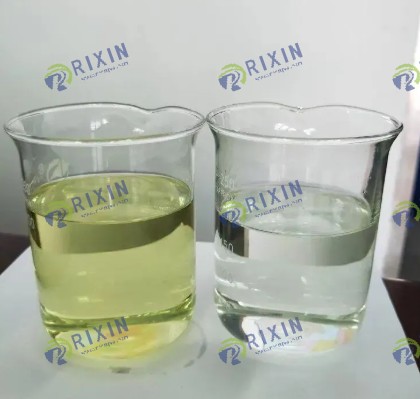
Based on their chemical structure and mode of action, oilfield clay stabilizers can be divided into four main categories: inorganic salts, cationic surfactants, organic polymers, and organosilicones. Each category has its own characteristics in terms of performance, applicable scenarios, and cost, forming a diversified product system:
(I) Inorganic Salt Clay Stabilizers
Inorganic salt clay stabilizers were the earliest type of product used, possessing advantages such as low cost, simple preparation, and rapid effect. They are still widely used in some oil reservoirs.
1. Main Types and Performance
Monovalent Salts: Represented by potassium chloride (KCl) and ammonium chloride (NH₄Cl). The K⁺ in potassium chloride can efficiently replace the Na⁺ between clay layers, effectively inhibiting montmorillonite swelling with minimal reservoir damage. It is suitable for medium-low temperature (<120℃) and low-mineralization reservoirs. The NH₄⁺ in ammonium chloride also has good ion exchange capacity and is easily soluble in water, making construction convenient. However, it easily decomposes at high temperatures to produce ammonia, affecting formation pressure stability. It is suitable for oil reservoirs with temperatures <100℃.
Divalent salts: Represented by calcium chloride (CaCl₂) and magnesium chloride (MgCl₂). Divalent ions have high charge density and strong adsorption to clay surfaces, resulting in better inhibition of swelling and dispersion than monovalent salts. They are suitable for reservoirs with high mineralization and high clay content. For example, calcium chloride maintains good inhibition in formation water with a mineralization of 20 × 10⁴ mg/L. However, divalent salts have relatively low solubility and may precipitate with carbonate and sulfate ions in formation fluids, requiring compatibility tests beforehand.
Composite salts : Composed of monovalent and divalent salts, such as KCl-CaCl₂ and NaCl-MgCl₂ composite systems. These combine the high solubility of monovalent salts with the strong inhibition of divalent salts, making them suitable for reservoirs with complex mineralization. For example, a 10% KCl + 5% CaCl₂ composite system can achieve an anti-swelling rate of over 90% for montmorillonite, with significantly lower precipitation than a single divalent salt system.
2. Limitations:
The effect of inorganic salt clay stabilizers is temporary, easily diluted by formation water, and has poor long-term stability; for reservoirs with high temperature and high clay content, the inhibition effect is limited; and the dosage is relatively large (usually 5%~15%), increasing construction costs and wastewater treatment pressure.
(II) Cationic surfactant clay stabilizers:
Cationic surfactant clay stabilizers are currently the most widely used type of product. They work through cation exchange and adsorption mechanisms, and have the advantages of long-lasting inhibition effect and low dosage, making them suitable for medium and high temperature reservoirs.
1. Main types and properties
: Quaternary ammonium salts: This is the core product of cationic surfactants, including dodecyltrimethylammonium chloride (DTAC), hexadecyltrimethylammonium chloride (CTAC), and dioctadecyldimethylammonium chloride (DODMAC), etc. Quaternary ammonium salts exhibit significant performance differences due to variations in the alkyl chain length of their cations: short-chain quaternary ammonium salts (C₁₂~C₁₄) have good solubility and are suitable for low-permeability reservoirs; long-chain quaternary ammonium salts (C₁₆~C₁₈) have strong adsorption capacity and long-lasting inhibition effects, making them suitable for medium- and high-permeability reservoirs. For example, cetyltrimethylammonium chloride at a dosage of 0.5% can achieve an anti-swelling rate of over 95% for montmorillonite, and even after aging at 120℃ for 7 days, the anti-swelling rate remains above 85%.
Imidazoline derivatives , represented by oleic acid imidazoline and dodecanoic acid imidazoline, contain imidazoline ring cationic groups in their molecular structure, possessing both good inhibition properties and temperature resistance. Imidazoline stabilizers have strong adsorption forces on clay surfaces due to their alkyl chains and excellent salt resistance, remaining stable even in formation water with a salinity of 30 × 10⁴ mg/L, making them suitable for high-temperature and high-salinity reservoirs. For example, oleic acid imidazoline can achieve an anti-swelling rate of 88% at 150℃ and a salinity of 25×10⁴ mg/L, with minimal impact on reservoir wettability.
Gemini cationic surfactants: These are a new type of cationic surfactant with two cationic head groups and two hydrophobic chains in their molecular structure. They exhibit high surface activity and adsorption capacity 2-3 times that of traditional quaternary ammonium salts. For example, didodecyl dimethyl ammonium bromide (G₁₂-2-1₂) can achieve an anti-swelling rate of 92% at a dosage of 0.2%, and also exhibits excellent shear resistance, making it suitable for high-shear operations such as fracturing.
2. Limitations:
Cationic surfactant clay stabilizers are relatively expensive; some products (such as long-chain quaternary ammonium salts) have poor solubility and require the addition of co-solvents; they are prone to hydrolysis in acidic environments, affecting stability; and they may react with anionic surfactants in the formation, requiring prior compatibility assessment.
(III) Organic Polymer Clay Stabilizers
Organic polymer clay stabilizers, with their high efficiency, durability, and multifunctionality, have become a research hotspot in recent years, suitable for reservoir protection in complex oil reservoirs (high temperature, high salinity, low permeability).
1. Main Types and Properties
Cationic Polymers: These include polyquaternary ammonium salts, epichlorohydrin-dimethylamine polymers (EPI-DMA), and acrylamide-methacryloyloxyethyltrimethylammonium chloride copolymers (PAM-DMC). These polymers contain a large number of cationic groups on their molecular chains, which can bind to clay particles through multi-point adsorption, providing a long-lasting inhibition effect, and also possessing viscosity-enhancing and profile-modifying functions. For example, epichlorohydrin-dimethylamine polymers, at a dosage of 0.3%, can achieve an anti-swelling rate of 94%, and after aging at 180℃ for 10 days, their performance shows no significant degradation, making them suitable for ultra-deep, high-temperature reservoirs; the molecular chains of PAM-DMC copolymers can form a network structure on the surface of clay particles, both inhibiting swelling and dispersion and encapsulating clay particles to prevent migration, making them suitable for low-permeability reservoirs.
Nonionic polymers: Represented by polyethylene glycol, polypropylene glycol, and ethylene oxide-propylene oxide block copolymers, these polymers function through steric hindrance mechanisms, exhibiting excellent salt and temperature resistance and good compatibility with other chemical agents. For example, polyethylene glycol (molecular weight 10,000), at a dosage of 0.5%, can achieve an anti-swelling rate of 85% and a damage rate to reservoir permeability of <5%, making it suitable for cation-sensitive reservoirs.
Amphoteric polymers: These polymers contain both cationic and anionic groups (such as amino and carboxyl groups, quaternary ammonium salt groups, and sulfonic acid groups) in their molecular chains, combining the strong adsorption of cationic polymers with the salt resistance of anionic polymers, making them suitable for extremely complex oil reservoirs. For example, acrylamide-methacryloyloxyethyltrimethylammonium chloride-2-acrylamido-2-methylpropanesulfonate copolymer (PAM-DMC-AMPS) maintains an anti-swelling rate of over 82% at 200℃ and a salinity of 35×10⁴mg/L, and also exhibits good shear resistance, making it suitable for fracturing operations in shale oil reservoirs. 2.
Limitations
The synthesis process of organic polymer clay stabilizers is complex and costly; some polymers are prone to adsorption and retention in low-permeability reservoirs, which may lead to pore throat blockage; and when the molecular weight is too large, solubility and injectability decrease, requiring strict control of the product’s molecular weight distribution.
(IV) Organosilicon Clay Stabilizers
Organosilicon clay stabilizers are a new type of high-efficiency product that works through a cross-linking curing mechanism, possessing advantages such as long-lasting inhibition effect and strong temperature and salt resistance, making them suitable for high-temperature, high-salt, and long-term development reservoirs.
1. Main Types and Performance
of Silane Coupling Agents: These include 3-aminopropyltriethoxysilane (KH-550) and γ-glycidoxypropyltrimethoxysilane (KH-560). These products contain alkoxysilane groups and active functional groups (such as amino and epoxy groups) in their molecular structure. The alkoxysilane groups hydrolyze to generate silanol groups, which condense with the hydroxyl groups on the clay surface to form covalent bonds, causing the clay particles to cross-link and solidify. The active functional groups can further react with other clay particles or rock skeletons to enhance the solidification effect. For example, KH-550, at a dosage of 0.8%, can achieve a swelling prevention rate of 96%, and its performance does not degrade after aging at 220℃ for 15 days, making it suitable for ultra-high temperature deep well reservoirs.
Organosilicon Resins: Represented by methyl silicone resin and phenyl silicone resin, these contain a large number of silicon-oxygen bonds in their molecular structure, which can form a dense siloxane protective film on the clay surface, possessing functions of inhibiting swelling, dispersing, and preventing corrosion. Organosilicon resin stabilizers exhibit strong chemical corrosion resistance, resisting the erosion of acids, alkalis, and salts, making them suitable for combined acidizing and fracturing operations. For example, methyl silicone resin, at a dosage of 1.0%, can achieve an anti-swelling rate of 93% and effectively inhibit the reaction between clay and acidizing fluids, reducing precipitation formation.
2. Limitations:
Organosilicon clay stabilizers are relatively expensive; temperature and pH values must be controlled during construction to ensure sufficient cross-linking reaction; excessive use may lead to over-solidification of the reservoir, affecting permeability, and the optimal dosage needs to be determined through core experiments.
