Address
304 North Cardinal St.
Dorchester Center, MA 02124
Work Hours
Monday to Friday: 7AM - 7PM
Weekend: 10AM - 5PM
Address
304 North Cardinal St.
Dorchester Center, MA 02124
Work Hours
Monday to Friday: 7AM - 7PM
Weekend: 10AM - 5PM

Technical Field
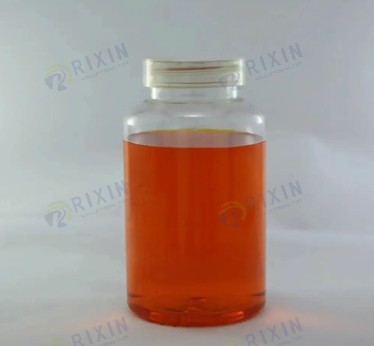
This invention relates to the field of oil production technology, specifically to an interface-controlled wetting and displacement agent for improving the recovery rate of low-permeability oilfields.
Background Technology
Low-permeability oilfields refer to oilfields with low reservoir permeability, low abundance, and low single-well productivity. Based on the average permeability of the reservoir, low-permeability reservoirs can be further divided into low-permeability reservoirs, ultra-low-permeability reservoirs, and extra-low-permeability reservoirs.
Low-permeability oilfields typically have reservoirs characterized by low porosity and low permeability, poor oil storage properties, relatively high rock cement content, and small rock development scale. The crude oil is characterized by low viscosity, low density, and uneven flow velocity. After encountering water, the oil recovery index will continuously decrease, adversely affecting the oilfield’s recovery rate. Even if oilfield production is carried out, it will result in significant resource depletion. Due to the low permeability, significant flow resistance needs to be overcome during the extraction process, making development difficult and requiring the use of appropriate oilfield engineering technologies.
For low-permeability reservoirs with relatively high permeability, conventional water injection is an effective method. By injecting water into the reservoir, the reservoir pressure is increased, thereby driving the crude oil outflow. However, the recovery rate of water drive is still not ideal. This is because the adhesion between crude oil and rock in the reservoir is one of the main factors hindering crude oil flow. Driving agents can be injected into the well to change the interaction force between crude oil and rock surface, reduce adhesion, and make it easier for crude oil to flow out of the reservoir.
Summary of the Invention
To address the aforementioned technical problems, this invention provides an interface-controlled wetting and displacement agent for improving the recovery rate of low-permeability oilfields.
The technical solution of the present invention is: an interface-controlled wetting and displacement agent for improving the recovery rate of low-permeability oilfields, wherein the interface-controlled wetting and displacement agent comprises, by weight, 6-10 parts of sodium dimethylol dodecyl sulfate, 2-5 parts of polysorbate-80, 2-4 parts of nano-sized titanium dioxide, 1-2 parts of ethanol, and 100-120 parts of deionized water.
Explanation: By using the interface-controlled wetting and displacement agent composed of the above components, its adsorption effect on the rock surface can be effectively enhanced, and the wetting control ability can be strengthened, thereby achieving the modulation of wettability from oleophilic to strong hydrophilic/strong oleophobic. By changing the wettability of the rock surface and the oil-water interface, the distribution and flow of fluid in the pores can be optimized, thereby significantly enhancing the recovery rate of low-permeability oilfields.
The beneficial effects of this invention are:
(1) The interface-controlled wetting and displacement agent of the present invention can effectively enhance the adsorption effect of the displacement agent on the rock surface, thereby improving the wetting control capability. By changing the wettability of the rock surface and the oil-water interface, the distribution and flow of fluid in the pores can be optimized, thereby significantly enhancing the recovery efficiency of low-permeability oilfields.
(2) The interface-controlled wetting and oil displacement agent of the present invention uses sodium dihydroxymethyl dodecyl sulfate as a component of the oil displacement agent, which can enhance the effect of the oil displacement agent on interface-controlled wetting, thereby improving the recovery rate of low-permeability oilfields.
(3) The interface-controlled wetting and displacement agent preparation method provided by the present invention can effectively obtain the interface-controlled wetting and displacement agent, and by controlling its mixing temperature, the components can be uniformly dispersed in the displacement system, thereby optimizing the use effect of the interface-controlled wetting and displacement agent.
Attached Figure Description
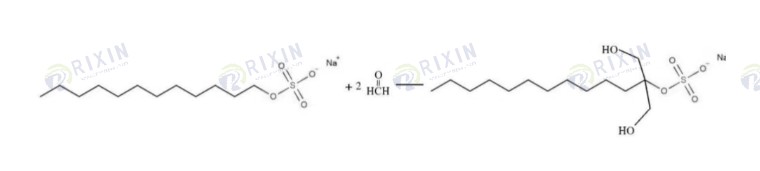
Figure 1 is a schematic diagram of the synthesis of sodium dihydroxymethyl dodecyl sulfate.
Example 1: An interface-controlled wetting and displacement agent for improving the recovery rate of low-permeability oilfields, comprising, by weight: 9 parts sodium dimethylol dodecyl sulfate, 4 parts polysorbate-80, 3 parts nano-sized titanium dioxide, 2 parts ethanol, and 112 parts deionized water.
The method for synthesizing sodium dihydroxymethyl dodecyl sulfate is as follows:
Sodium dodecyl sulfate and solvent were mixed at a ratio of 12g:100mL to obtain a mixed system. The mixed system was heated in a water bath to a reflux temperature of 71°C. Then, formaldehyde was slowly added dropwise to the mixed system while stirring. After reacting for 4 hours, the solvent was removed by rotary evaporation to obtain a white solid, which is sodium dihydroxymethyl dodecyl sulfate.
Specifically, the amount of sodium dodecyl sulfate added is n, which is 12g, and the amount of formaldehyde added is n, where n is 2.7g, and n ∈ [0, 12g], which conforms to the range of n values.
Let m be the solvent volume ratio coefficient and m∈positive integer, that is, the amount of solvent added is mmL, that is, m is 1, and the solvent is methanol; the formaldehyde dropping rate is 3 drops/min, and the stirring speed is 140rpm. It can be understood that 1mL = 20 drops.
Performance Evaluation:
Application Experiment (I):
The structure of sodium dimethylolpropionate sulfate synthesized in Examples 1 and 5-12 was characterized by infrared spectroscopy and proton nuclear magnetic resonance spectroscopy. After infrared spectroscopy analysis , it was found that the stretching vibration peak of -OH was the most obvious in the products synthesized in each example, which can be inferred that the product is sodium dimethylolpropionate sulfate. At the same time, the proton nuclear magnetic resonance spectrum with D2O as solvent can be seen from the product to prove the presence of -OH and its position as shown in Figure 1.
To investigate the synthesis effects of the above embodiments, the synthesized product was used as the actual addition amount of sodium dimethylol dodecyl sulfate, and the preparation method of Example 2 was used to formulate an interface-controlled wetting and displacement agent. The indoor simulation conditions of a low-permeability oilfield (permeability of (0.01~5)×10-2μm2) are shown in Table 1 below:
Table 1 Core parameters of low-permeability oilfields
| project | Length/cm | Diameter/cm | <!)> | Porosity /% |
| low-permeability oil fields | 8.627 | 3.175 | 34.7 | 10.5 |
Then, its oil displacement effect was tested, simulating water flooding, oil displacement agent flooding, and subsequent simulated low-permeability water flooding in low-permeability oilfields. In the initial low-permeability water flooding, when the produced fluid water cut was >98%, the calculated recovery rate was 22.91%. After injecting 3.729 mL of interface-controlled wetting oil displacement agent and maintaining a constant temperature for 12 hours, subsequent simulated low-permeability water flooding was conducted. When the produced fluid water cut was >98%, the recovery rate after the action of the interface-controlled wetting oil displacement agent in each of the above embodiments was statistically analyzed.
A control group was set up, which was based on Example 1, except that sodium dimethylolpropionate sulfate was replaced with sodium dodecyl sulfate in equal amounts, while all other conditions remained the same.
The results are shown in Table 2 below:
Table 2. Oil recovery rate of interface-modified wetting and displacement agents in various embodiments.
| Group | Recovery rate / % | Increase recovery rate /% | Group | Recovery rate / % | Increase recovery rate /% |
| Example 1 | 36.12 | 13.21 | Example 9 | 36.14 | 13.23 |
Application Experiment (II):
Based on the method described in Experiment (I) above, we will now explore the formulation and preparation method of the interface-controlled wetting and oil displacement agent. The results are shown in Table 3 below:
Table 3. Oil recovery rate of interface-modified wetting and displacement agents in each embodiment.
| Group | Recovery rate / % | Increase recovery rate /% |
| Example 9 | 36.12 | 13.21 |
Application Experiment (3):
Based on the method described in Experiment (I) above, the effects of different nano-sized titanium dioxide were investigated, and the results are shown in Table 4 below:
Table 4. Oil recovery rate of interface-modified wetting and displacement agents in various embodiments.
| Group | Recovery rate / % | Increase recovery rate /% |
| Example 1 | 36.12 | 13.21 |
