Address
304 North Cardinal St.
Dorchester Center, MA 02124
Work Hours
Monday to Friday: 7AM - 7PM
Weekend: 10AM - 5PM
Address
304 North Cardinal St.
Dorchester Center, MA 02124
Work Hours
Monday to Friday: 7AM - 7PM
Weekend: 10AM - 5PM

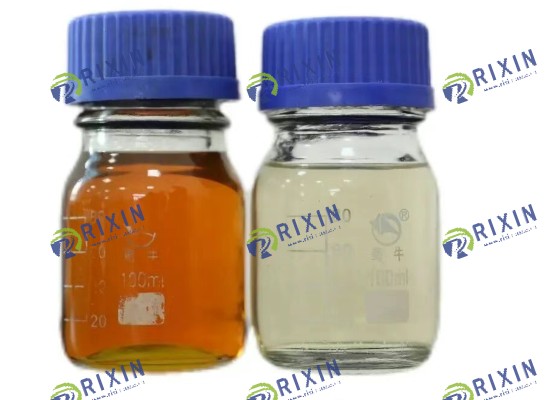
The reason why water-locking agents can effectively relieve reservoir water-locking damage and restore and improve reservoir permeability lies in the synergistic effect of multiple mechanisms, which solve the water-locking problem from multiple dimensions such as improving fluid properties, adjusting reservoir wettability, and optimizing the pore throat flow environment.
(I) Reducing interfacial tension and improving fluid flowability
Interfacial tension is one of the key factors affecting fluid flow in reservoir pores. Water-locking is closely related to the high surface tension of the aqueous phase at the pore throat; this high surface tension makes it difficult for the aqueous phase to flow, easily leading to stagnation and blockage. The surfactant components in water-lock-breaking agents can be rapidly adsorbed at the oil-water interface and the water-rock interface, reducing fluid flow resistance by lowering interfacial tension.
At the molecular level, surfactant molecules have both hydrophilic and hydrophobic groups. When added to the reservoir fluid, the hydrophilic groups face the aqueous phase, and the hydrophobic groups face the oil phase or rock surface, forming an oriented adsorption layer. This adsorption layer effectively weakens the cohesive forces between water molecules and the adhesion between water molecules and the rock surface, thereby reducing the surface tension of water and the contact angle between water and the rock surface. For example, injecting nonionic surfactant-based water-locking agents into the reservoir can reduce the interfacial tension between oil and water from the original 30-50 mN/m to below 1 mN/m , and increase the contact angle between water and the rock surface from below 30° (strong water wetting) to above 90° (neutral or weak oil wetting), significantly improving the flow environment of oil and gas in the pores.
Reducing interfacial tension not only promotes the discharge of the retained aqueous phase but also improves the dispersion and fluidity of crude oil, making it easier to displace crude oil that was originally attached to the rock surface. This, in turn, removes water lock and increases oil and gas recovery. Related experimental data show that when the oil-water interfacial tension is reduced to below 1 mN/m, the flowability of crude oil can be increased by 3-5 times, and the effective permeability of the reservoir can be restored to more than 80% of the original permeability .
(II) Adjusting reservoir wettability and optimizing oil and gas flow channels.
The wettability of reservoir rocks refers to the ability of fluids to adhere to and spread on the rock surface, directly affecting the distribution and flow patterns of oil, gas, and water in the reservoir pores. In reservoirs severely damaged by water lock, the rock surface typically exhibits strong water-wetness characteristics. Water molecules easily form a stable water film on the rock surface, occupying oil and gas flow channels and hindering their movement. Water-lock-breaking agents can alter the wettability of the rock surface through physical adsorption or chemical interaction, transforming it from strong water-wetness to neutral or weak oil-wetness, thereby optimizing oil and gas flow channels.
For surfactant-based water-lock-breaking agents, the hydrophobic groups in their molecules can adsorb onto the rock surface, covering the hydrophilic sites and reducing the contact area between water molecules and the rock surface, thus altering the wettability of the rock surface. For example, the long-chain alkyl groups (hydrophobic groups) in cationic surfactant molecules can adsorb onto the surface of sandstone (mainly composed of silica, with a negatively charged surface) through van der Waals forces, forming a hydrophobic film that transforms the rock surface from water-wet to oil-wet. This shift in wettability allows oil and gas to spread and flow more easily on the rock surface, while reducing the adsorption and retention of water on the rock surface.
For nanomaterial-based water-locking agents, nanoparticles can be fixed to the rock surface through physical deposition or chemical bonding, altering the microstructure and chemical composition of the rock surface, thereby adjusting wettability. For example, surface-modified nano-silica particles (hydrophobic modification) can be adsorbed onto the rock surface, forming a rough hydrophobic surface, increasing the contact angle of water on the rock surface, and achieving a shift in wettability from water-wet to superhydrophobic. This superhydrophobic surface can effectively prevent the adhesion and retention of water on the rock surface, significantly reducing water-locking damage.
Experimental studies have shown that when the wettability of reservoir rocks changes from strong water-wet to weak oil-wet or neutral, the relative permeability of oil and gas can increase by 20%-40% , while the relative permeability of the water phase decreases by 15%-30% , significantly improving the flow conditions of oil and gas and laying the foundation for increased oil and gas production.
(III) Inhibiting Clay Swelling and Migration, Protecting Reservoir Pore-Throat Structure
In clay-bearing reservoirs (such as sandstone reservoirs), water-locking is often accompanied by the swelling and migration of clay minerals, further exacerbating reservoir damage. Clay minerals (such as montmorillonite, illite, kaolinite, etc.) have strong hydrophilicity. When external fluids invade the reservoir, water molecules easily enter the interlayer of clay minerals, causing the clay minerals to swell and increase in volume, blocking the reservoir pore throats. At the same time, the swollen clay particles are easily migrated under the scouring action of the fluid, flowing with the fluid and accumulating in the small pore throats, forming secondary blockages, further reducing the reservoir permeability.
Some components of water-locking agents (such as cationic surfactants, polymers, and nanomaterials) inhibit clay swelling and migration, effectively protecting the reservoir pore-throat structure and reducing the cumulative effect of water-locking damage. The positively charged groups in cationic surfactant molecules can electrostatically adsorb onto the negatively charged surfaces of clay minerals, forming a protective film that prevents water molecules from entering the clay mineral interlayers, thus inhibiting clay swelling. Simultaneously, cationic surfactants can alter the surface charge properties of clay particles, reducing interparticle repulsion, promoting particle aggregation, and decreasing the migration capacity of clay particles.
Polymer-based water-locking agents (such as polyvinylpyrrolidone and polyacrylamide) can encapsulate clay particles through molecular chain entanglement and adsorption, forming a stable complex that prevents clay particle swelling and dispersion. Furthermore, polymer molecules can form an adsorption film on the surface of reservoir pore throats, filling tiny pores and reducing the migration channels for clay particles.
Nanoparticles in nanomaterial-based water-locking agents can fill the interlayers of clay minerals and the tiny pores of the reservoir, forming a physical barrier that prevents water molecules from entering the clay mineral interlayers and restricts the migration of clay particles. For example, nano-silica particles can enter the interlayers of montmorillonite clay, forming stable chemical bonds with clay minerals and inhibiting their expansion, reducing the clay expansion rate from over 300% to below 50% .
By inhibiting clay expansion and migration, the water-locking agent effectively protects the pore-throat structure of the reservoir, preventing further decline in reservoir permeability due to clay damage, and ensuring the sustained effectiveness of the water-locking effect. Relevant field application data show that in low-permeability reservoirs containing clay minerals, the long-term permeability retention rate can reach over 80% after using a water-locking agent with clay stabilizing function, which is far higher than the situation without the use of clay stabilizers (permeability retention rate is only around 50%).
(iv) Promoting the discharge of retained aqueous phase and restoring reservoir permeability.
The ultimate goal of water-locking agents is to promote the discharge of retained aqueous phase from the reservoir and restore its permeability. Besides creating favorable conditions for aqueous phase discharge through mechanisms such as reducing interfacial tension, adjusting wettability, and inhibiting clay swelling, water-locking agents can also directly promote the flow and discharge of retained aqueous phase through their own physicochemical properties.
Alcohol-based water-locking agents have good solubility and volatility, enabling them to mix rapidly with retained water in the reservoir, reducing the viscosity and surface tension of the water and improving the fluidity of the aqueous phase. Simultaneously, the volatility of alcohols makes the mixed aqueous phase more easily evaporate, forming a gas phase that is discharged from the reservoir along with oil and gas. For example, after fracturing in shale gas reservoirs, injecting isopropanol-based water-locking agents can increase the flowback rate of fracturing fluid from below 60% to above 85% , significantly reducing the volume of retained aqueous phase and effectively relieving water-locking damage.
Polymer-based water-locking agents can increase their sweep range in the reservoir by adjusting the mobility ratio of the injected fluid, allowing them to come into more thorough contact with the retained aqueous phase and promoting its removal. For example, polyethylene glycol-based water-locking agents have a certain viscosity and, after injection into the reservoir, can form a stable displacement front, driving the retained aqueous phase towards the production well and improving the efficiency of aqueous phase removal.Furthermore, water-locking agents can disrupt the “water plug” structure formed by the water phase at pore throats during their interaction with the retained aqueous phase. For example, surfactant-based water-locking agents can penetrate into the interior of the “water plug,” reducing the cohesive forces between water molecules, causing the “water plug” to rupture and form small water droplets that are discharged from the reservoir with the fluid flow. Nanoparticles in nanomaterial-based water-locking agents can disrupt the stability of the “water plug” through impact and compression, promoting the dispersion and discharge of the aqueous phase.
Through the synergistic effect of multiple mechanisms, water-locking agents can effectively promote the discharge of the retained aqueous phase from the reservoir, significantly restoring the reservoir’s permeability. Experimental results show that in low-permeability reservoirs, after treatment with water-locking agents, the reservoir permeability can be restored to 75%-95% of the original permeability, and in some blocks, it even exceeds the original permeability, providing crucial support for improving oil and gas well production.
