Address
304 North Cardinal St.
Dorchester Center, MA 02124
Work Hours
Monday to Friday: 7AM - 7PM
Weekend: 10AM - 5PM
Address
304 North Cardinal St.
Dorchester Center, MA 02124
Work Hours
Monday to Friday: 7AM - 7PM
Weekend: 10AM - 5PM

In the mid-to-late stages of oilfield development, reservoir blockage has become one of the core issues restricting production capacity. Whether in conventional sandstone reservoirs or unconventional tight reservoirs, during long-term water injection development, fracturing, or production operations, factors such as formation mineral deposition, organic scale formation, clay expansion, and residual temporary plugging agents can easily lead to pore and throat blockage, decreased permeability, and consequently, a sharp decline in oil well production and reduced water absorption capacity of injection wells. Unblocking agents, acting as “reservoir unblockers,” remove blockages and restore reservoir flow channels through chemical or physical means, becoming a key technical means to ensure the continuous and stable production of oilfields. With increasingly complex reservoir development environments (such as high salinity, high sulfur content, and high-temperature deep wells), unblocking agent technology is constantly being upgraded, forming a product system centered on acidic and neutral unblocking agents, encompassing multiple functions. In-depth research into the technical characteristics, suitable scenarios, and application strategies of these two mainstream unblocking agents is of great significance for improving unblocking efficiency and protecting reservoir production capacity.
Unblocking agents are essentially “targeted unblocking materials.” Their core function is to remove the blocking substances in the pore throat through chemical reactions (such as dissolution, oxidation, and chelation) or physical actions (such as stripping and dispersion) with the reservoir plugging materials, thereby restoring or even improving reservoir permeability. From the perspective of the causes of plugging, oilfield reservoir plugging can be mainly divided into four categories:
1. Inorganic blockage : including deposits of salts such as calcium carbonate, barium sulfate, and strontium sulfate, as well as blockages formed by the expansion or migration of clay minerals (montmorillonite, illite);
2. Organic blockage : This is mainly caused by the adsorption and deposition of asphaltenes and colloids in crude oil near the wellbore or in the reservoir pore throat, forming organic scale blockage;
3. Complex blockage : A complex blockage system formed by the mutual encapsulation and mixing of inorganic and organic blockages, commonly seen in the high water-cut development stage of old oilfields;
4. Residual blockage from engineering : Blockage caused by residual plugging agents (such as temporary plugging ball fragments, residual particles), drilling fluid solid particles, etc. after fracturing operations.
Currently, the oilfield unblocking agent industry faces three core demands: First, improved reservoir adaptability . For complex reservoirs with high temperatures (150-220℃), high salinity (20×10⁴-30×10⁴ mg/L), and high sulfur content (H₂S content > 1000 mg/m³), unblocking agents need to possess stronger temperature resistance, salt resistance, and corrosion resistance. Second, enhanced unblocking precision . Unblocking agents must avoid excessive dissolution of the reservoir matrix, achieving “targeted unblocking and reservoir protection.” Third, upgraded environmental friendliness . Traditional strong acid unblocking agents easily cause formation damage and environmental risks, necessitating the development of low-pollution, biodegradable unblocking systems. Against this backdrop, acidic and neutral unblocking agents, with their respective technological advantages, have become the mainstream choices for addressing different types of blockages, and their application strategies have become a key focus of industry research.
Acidic unblocking agents are systems that use acids as their core component. They work by chemically reacting the acid with inorganic blockages (such as carbonates and metal oxides), converting insoluble blockages into soluble substances, thereby clearing blockages from the reservoir. The core technology lies in “dissolution efficiency” and “reservoir protection balance.” They are primarily applicable to inorganic blockages, such as carbonate deposition blockages in limestone reservoirs and clay expansion blockages in water injection wells.
Based on the type of acid, acidic unblocking agents can be divided into three main categories:
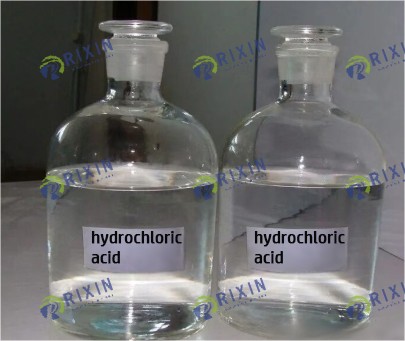
Conventional inorganic acid unblocking agents : mainly composed of hydrochloric acid and hydrofluoric acid, suitable for reservoirs with high carbonate content (such as limestone oil reservoirs). Hydrochloric acid can quickly dissolve calcium carbonate (reaction formula: CaCO₃ + 2HCl = CaCl₂ + H₂O + CO₂↑), with a fast dissolution rate and low cost, but it is highly corrosive and requires the addition of corrosion inhibitors. Hydrofluoric acid can dissolve siliceous minerals (such as clay and quartz), but it easily reacts with calcium and magnesium ions in the formation to form calcium fluoride and magnesium fluoride precipitates, and needs to be used in combination with hydrochloric acid (e.g., hydrochloric acid + hydrofluoric acid = 9:1-10:1).
Organic acid unblocking agents : These agents primarily consist of formic acid, acetic acid, citric acid, and sulfamic acid, and are suitable for corrosion-sensitive reservoirs (such as old oil wells with aging casing). Organic acids have mild acidity (pH 2-4), good corrosion inhibition, and form highly stable chelates with metal ions, making them less prone to secondary precipitation. For example, sulfamic acid can slowly dissolve calcium carbonate at 80-120℃, with a controllable dissolution rate, making it suitable for high-temperature environments in deep wells.
Composite acid unblocking agents : These are formulated from inorganic acids, organic acids, and additives (corrosion inhibitors, iron ion stabilizers, anti-swelling agents, and drainage aids), balancing dissolution efficiency with reservoir protection. For example, the “hydrochloric acid + acetic acid + fluoroboric acid” composite system allows fluoroboric acid to slowly release fluoride ions, preventing immediate precipitation, while acetic acid reduces acid corrosion of the casing, making it suitable for complex inorganic plugging reservoirs.
Regardless of type, acidic unblocking agents must meet the following core performance requirements:
① Solubility: Solubility of the target blockage ≥ 85% (reaction time at 25℃ for 2 hours);
② Corrosion inhibition: Corrosion rate of N80 steel ≤ 0.5 mm/a at 120℃ (after adding corrosion inhibitor);
③ Prevention of secondary precipitation: Precipitation in the solution after reaction ≤ 0.1 g/L.
Preliminary assessment: Accurately matching congestion types
Before application, the type and composition of the blockage need to be determined through core analysis, fluid sampling, and well logging data (such as density logging and neutron logging): ① If the blockage is calcium carbonate (content > 70%), select 15%-20% hydrochloric acid unblocking agent;
② If the blockage contains siliceous minerals (clay content > 30%), select a clay-acid compound system;
③ If the oil well casing corrosion rate > 1 mm/a, select 10%-15% organic acid (such as formic acid) unblocking agent to avoid aggravating casing damage.
On-site construction: Controlling reaction rate and process parameters
The dissolution rate of acidic unblocking agents is affected by temperature, acid concentration, and discharge rate. Process control is needed to achieve “high-efficiency dissolution + low damage”:
① When the temperature is >150℃, use a slow-release organic acid (such as aminosulfonic acid) or add 0.5%-1% of a retarder (such as alkylpyridine) to avoid excessive acid consumption leading to incomplete unblocking;
② Control the discharge rate at 5-10 m³/h, using a “low-discharge injection – well-clogging reaction – high-speed return” process, with a clogging time of 2-4 hours (adjusted according to the blockage thickness) to ensure sufficient acid contact with the blockage;
③ Before injection, pre-treat the wellbore to remove oil and rust to prevent the acid from reacting with oil to form an emulsion, which would affect the unblocking effect.
Reservoir protection: Adding functional additives
Acidic unblocking agents easily cause reservoir matrix dissolution, clay swelling, or casing corrosion, requiring optimization through additives to achieve protection:
① Add 1%-2% anti-swelling agent (such as potassium chloride, polyquaternary ammonium salt) to inhibit clay mineral swelling, with an anti-swelling rate ≥90%;
② Add 0.3%-0.5% iron ion stabilizer (such as disodium EDTA, citric acid) to chelate Fe³+ in the formation and prevent the formation of ferric hydroxide precipitate;
③ Add 0.2%-0.3% drainage aid (such as fluorocarbon surfactant) to reduce the interfacial tension between the acid and the reservoir (≤25mN/m), promote the backflow of the reaction solution, and reduce residual damage.
(II) Neutral unblocking agents: “gentle unblockers” for organic and composite blockages.
Neutral unblocking agents are unblocking systems with a pH value close to neutral (6-8). They remove organic or complex blockages through oxidation, dispersion, and stripping. They do not rely on strong acid dissolution. Their core advantages are “low damage” and “wide compatibility”. Applicable scenarios include organic blockages (such as bituminous deposits), complex blockages (inorganic + organic mixed blockages), and acid-sensitive reservoirs (such as siliceous matrix in sandstone oil reservoirs).
Based on their mechanism of action, neutral unblocking agents can be divided into four main categories:
Oxidative neutral unblocking agents : These agents primarily consist of peroxides (hydrogen peroxide, ammonium persulfate) and hypochlorites, which decompose organic plugging materials (such as asphaltene and gum) through oxidation. For example, ammonium persulfate can decompose at 80-120℃ to generate free radicals (SO₄⁻・), which oxidize and break the carbon-carbon bonds of asphaltene, converting large-molecule organic scale into small-molecule soluble substances with a solubility ≥80% (reaction time 4 hours at 120℃). This type of unblocking agent requires the addition of an activator (such as ferrous sulfate) to lower the decomposition temperature and is suitable for high-temperature organically plugged reservoirs.
Dispersible neutral unblocking agents : These agents use surfactants (nonionic surfactants such as OP-10, anionic surfactants such as sodium dodecylbenzenesulfonate) as the core. By reducing interfacial tension and through adsorption and stripping, they disperse the blockage into tiny particles, which are then discharged with the produced fluid. For example, the “OP-10 + Span-80” compound system can disperse asphaltene deposits into particles with a diameter <10μm, with a dispersion stability ≥24 hours, making it suitable for organic scale blockage near the wellbore.
Chelating neutral unblocking agents : These agents primarily consist of chelating agents such as EDTA, DTPA (diethylenetriaminepentaacetic acid), and glycolic acid. They remove inorganic blockages by forming stable chelates with metal ions (Ca²⁺, Mg²⁺, Fe³⁺) while preventing secondary precipitation. For example, disodium EDTA has a chelation capacity ≥20 g/L (25℃) for calcium carbonate, making it suitable for inorganic-organic composite blockages in low-permeability sandstone reservoirs without damaging the siliceous matrix.
Bio-enzyme unblocking agents : These agents primarily consist of lipase, protease, and cellulase. They decompose organic blockages (such as colloids in crude oil and cellulose in drilling fluid) through biocatalysis. They are highly environmentally friendly (biodegradable) and cause minimal damage, making them suitable for oilfields with high environmental requirements (such as ecologically sensitive onshore areas). For example, lipase can decompose fatty acid esters in crude oil at 40-60℃, with an enzyme activity ≥1000U/mL, resulting in a reservoir permeability recovery rate ≥90% after unblocking.
The core performance requirements for neutral unblocking agents are:
① pH value 6-8, with a dissolution rate of ≤5% on the reservoir matrix;
② Dispersion/oxidation efficiency: removal rate of organic plugging materials ≥80%;
③ Environmental friendliness: biodegradability ≥90% (compliant with GB/T 27857-2011 standard).
Scenario adaptation: Selecting a system based on the type of congestion.
The application of neutral unblocking agents requires precise matching to the cause of the blockage:
① If the blockage is asphaltene deposit (organic carbon content > 60%), choose an oxidizing (ammonium persulfate + activator) or dispersing (nonionic surfactant) unblocking agent;
② If it is an inorganic-organic composite blockage (such as calcium carbonate + asphaltene mixed blockage), choose a “chelating + dispersing” composite system (such as EDTA + OP-10);
③ If it is a low-permeability sandstone reservoir (permeability < 10mD), choose a bio-enzyme unblocking agent or a low-damage chelating unblocking agent to avoid matrix erosion;
④ If it is an offshore oilfield or an ecologically sensitive area, prioritize the use of bio-enzyme unblocking agents to reduce environmental risks.
Construction process: Optimize injection parameters and reaction conditions
Neutral unblocking agents have a slower action rate than acidic unblocking agents, and their efficiency needs to be improved through process optimization:
① Oxidative unblocking agents require control of the reaction temperature. For example, ammonium persulfate has the highest activation efficiency at 80-100℃. If the reservoir temperature is <60℃, 0.1%-0.2% of an activator (such as Co²+ catalyst) needs to be added;
② Dispersive unblocking agents require ensuring that the injection rate matches the reservoir permeability. For low-permeability reservoirs (<5mD), the injection rate should be controlled at 2-5m³/h to avoid excessive pressure that could lead to compaction of the blockage;
③ Bioenzyme unblocking agents require control of pH (6-7) and temperature (40-60℃) to avoid enzyme inactivation. The well shut-in time needs to be extended to 6-8 hours to ensure that the enzyme fully catalyzes the reaction.
Enhanced effects: synergistic application with assistive technologies
For complex blockages, neutral unblocking agents can be used in conjunction with physical unblocking techniques to improve the unblocking effect:
① Combined with ultrasonic unblocking: Ultrasonic waves (frequency 20-40kHz) can enhance the diffusion of unblocking agents in the pore throat, increasing the removal rate of dispersed unblocking agents by 15%-20%;
② Combined with nitrogen-assisted drainage: After injecting neutral unblocking agents, nitrogen (pressure 5-10MPa) is injected to utilize the liquid-carrying effect of nitrogen to promote the return of blockage particles and reduce residues;
③ Combined with temporary plugging-unblocking: For staged fracturing wells, high-permeability layers are first sealed with temporary plugging agents, and then neutral unblocking agents are injected to specifically treat low-permeability layer blockages, achieving “directional unblocking + balanced production capacity”.
Whether it is an acidic or neutral unblocking agent, the core objective of its application is “unblocking efficiency enhancement + reservoir protection”. It is necessary to achieve full-process control through common technologies to avoid secondary damage to the reservoir or reduction in production capacity after unblocking.
Synergistic effect of corrosion inhibition and swelling prevention : Acidic unblocking agents need to be combined with a “corrosion inhibitor + swelling prevention agent” system, such as “imidazoline corrosion inhibitor (0.5%) + polyquaternary ammonium salt swelling prevention agent (1%)”, which reduces the corrosion of the casing by acid and inhibits clay swelling. If the neutral unblocking agent contains oxidizing components (such as ammonium persulfate), 0.1%-0.2% of metal corrosion inhibitor (such as benzotriazole) needs to be added to avoid oxidation and corrosion of the wellbore.
Secondary precipitation prevention : For acidic unblocking agents, iron ion stabilizers (such as citric acid) should be added to control the Fe³+ concentration ≤0.5g/L; for neutral chelating unblocking agents, ensure that the chelating agent is in excess (molar ratio: chelating agent: metal ion = 1.2:1) to avoid the decomposition of chelates and precipitation; after the reaction, timely backflow is required, with a backflow rate ≥90%, to reduce the residence time of residual liquid in the reservoir.
Matrix dissolution control : For sandstone reservoirs, the concentration of hydrofluoric acid in the acidic unblocking agent should be ≤5%, and the injection amount should be controlled at “10%-15% of the reservoir pore volume” to avoid excessive dissolution leading to damage to the reservoir framework; the neutral unblocking agent needs to be verified by core experiments to ensure that the dissolution rate of the reservoir matrix is ≤3%.
The effectiveness of unblocking agents needs to be monitored and evaluated throughout the entire application cycle, from “during construction to post-construction,” with key indicators including:
Monitoring during construction :
① Pressure monitoring: If the injection pressure suddenly rises to >5MPa, it may be due to compaction of the blockage or secondary sedimentation. It is necessary to reduce the discharge rate or inject a drainage aid;
② Drainage fluid analysis: Monitor the content of blockage in the drainage fluid (such as calcium carbonate concentration and asphalt content). If the content continues to decrease to <0.1g/L, it indicates that the unblocking is complete.
Post-construction evaluation :
① Production capacity indicators: After unblocking, the production of oil wells increases by ≥30%, the water absorption index of injection wells increases by ≥25%, and the stabilization time is ≥3 months, which is considered as effective unblocking;
② Reservoir permeability: Through pressure recovery test or core flow experiment, the reservoir permeability recovery rate after unblocking is measured to be ≥85%, with no obvious damage;
③ Environmental protection indicators: The pH value of the flowback fluid is restored to 6-8, and the chemical oxygen demand (COD) is ≤100mg/L, which meets the oilfield wastewater discharge standards.
Currently, oilfield unblocking agent technology still faces three major challenges: First, in ultra-deep wells (depth > 6000m) and high-temperature (> 200℃) environments, the stability of unblocking agents is insufficient (e.g., ammonium persulfate decomposes rapidly at 220℃, with an effective period of < 1 hour); second, the unblocking efficiency of complex composite blockages (e.g., sulfur-containing blockages + organic scale) is low, and a single type of unblocking agent is difficult to address all issues; third, the cost of unblocking agents is high (e.g., the unit price of bio-enzyme unblocking agents is 5-8 times that of conventional acid unblocking agents), limiting large-scale application.
In the future, unblocking agent technology will make breakthroughs in three directions:
1. High temperature resistance and long-lasting effect : Develop “high temperature stable unblocking agents”, such as slow-release acid with heterocyclic compounds as carriers (slow release time ≥ 4 hours at 220℃) and high temperature resistant bio-enzymes (through genetic engineering, the enzyme activity stability temperature is increased to above 100℃) to adapt to the ultra-deep well environment;
2. Intelligent Response-Based Unblocking : Develop an “environment-responsive unblocking system,” such as pH-responsive microcapsule unblocking agents (which automatically rupture and release acid in acidic blockage areas while remaining stable in neutral areas) and temperature-responsive surfactants (which activate dispersion function when reservoir temperature > 120℃), to achieve “directional unblocking and on-demand release.”
3. Low cost and environmental protection : Promote the resource utilization of industrial by-products (such as using waste acid from steel plants to prepare composite acid unblocking agents) to reduce costs; develop fully biodegradable unblocking agents (such as starch-based bio-enzyme carriers) with a biodegradation rate of ≥95% to meet environmental protection requirements.
Acidic and neutral unblocking agents are the core types of oilfield unblocking technologies, and have formed complete technical systems for inorganic blockage and organic/composite blockage, respectively: acidic unblocking agents have the advantage of high-efficiency dissolution, and need to balance dissolution efficiency and reservoir protection through additives; neutral unblocking agents are characterized by low damage and wide compatibility, and need to be combined with process optimization to improve the rate of action.
