Address
304 North Cardinal St.
Dorchester Center, MA 02124
Work Hours
Monday to Friday: 7AM - 7PM
Weekend: 10AM - 5PM
Address
304 North Cardinal St.
Dorchester Center, MA 02124
Work Hours
Monday to Friday: 7AM - 7PM
Weekend: 10AM - 5PM

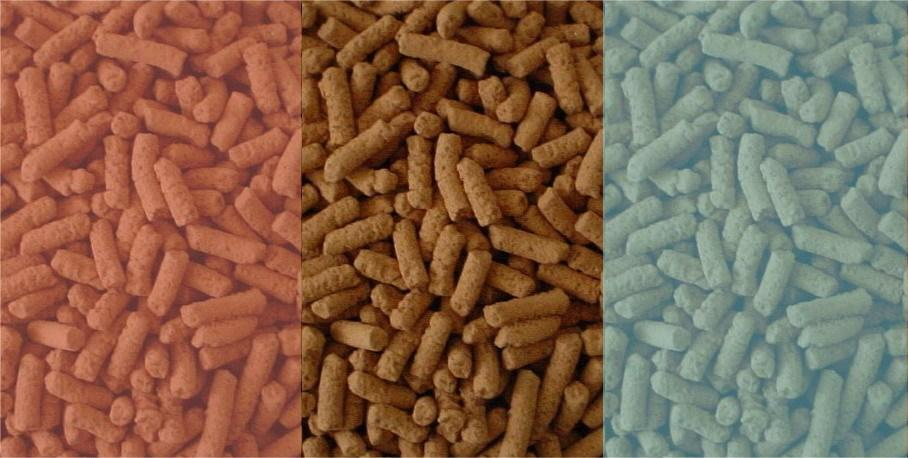
Desulfurizer generally refers to the removal of free sulfur or sulfur compounds in fuels, raw materials or other materials; In the control and treatment of pollutants, it mainly refers to the agents used to remove sulfur oxides (including SO2 and SO3) from exhaust gases. All kinds of alkaline compounds can be used as desulfurizers.
To remove sulfur dioxide from flue gas, the most popular desulfurizer is cheap lime, limestone and alkaline solution prepared with lime agent. Chemical plants and smelters often use sodium carbonate, basic aluminum sulfate and other solutions as desulfurizers to treat the exhaust gas containing sulfur dioxide, and can be desorbed and recycled.
This mixed solution desulfurizer has surface activity and catalytic oxidation, which can promote the direct reaction of SO2, accelerate the dissolution of CaCO3, promote the rapid oxidation of CaSO3 to CaSO4, strengthen the precipitation of CaSO4, reduce the liquid-gas ratio, reduce the calcium-sulfur ratio, and reduce the evaporation of water. When the concentration of SO2 in the flue gas inlet is higher than the design value, the PH value in the absorber reaction tank is reduced, and a larger Ca/S ratio is required. When the volume of the absorber reaction tank does not need to be expanded, CaCO3 can dissolve quickly, increase the concentration of calcium ions, and maintain the PH value of the slurry in the normal range, which has a certain buffer effect on PH value. Extending the operating time of the slurry in the working section and reducing the number of mixing times can significantly reduce the scale of the equipment, the scale layer becomes thinner, and the scale layer is easy to fall off after washing with water after shutdown. Desulphurization system scaling dispersion and activity, reduce the sludge of scaling, reduce the content of chloride ions in the slurry, the corrosion and scaling rate of various materials in the desulfurization equipment have been reduced to varying degrees, among which carbon steel is the most reduced, the corrosion and scaling rate can be reduced by 74% and 79% respectively, polyvinyl chloride can be reduced by 48% and 55%. The addition of desulfurizer can play a role in preventing scale, corrosion and corrosion, reducing the blockage, scaling, corrosion and wear of the desulfurization nozzle, reducing the scaling, corrosion and wear of the slurry circulating pump and impeller, and reducing the maintenance and replacement of spare parts in the desulfurization system. The selection range of desulphurization materials is broadened to improve the reliability of the system. In different working conditions can reduce and stop the slurry circulation pump and oxidation fan, improve desulfurization efficiency, reduce operating costs, suitable for sulfur content changes in coal, and apply to high sulfur coal. In the application of flue gas desulphurization, it has broad advantages in market promotion and can produce considerable economic and social benefits.
1. Iron oxide desulfurizer
Iron oxide desulfurizer is a solid desulfurizer, which can be desulfurized with or without oxygen. The principle is to chemically adsorb sulfur-containing compounds in the exhaust gas into the small hole of the desulfurizer to change its chemical composition so as to purify the gas. When the desulfurizer reaches saturation, that is, it no longer has the desulfurization ability, it needs to be regenerated, such as using water steam for stripping regeneration. However, after the use of iron oxide desulfurizer for a long time, its activity will continue to decline, such as the small hole in it is blocked by some impurities, then the desulfurizer is deactivated, but when the reaction system has trace oxygen, it can improve its desulfurization activity and extend its service life. Active ingredients in waste desulfurizer can be recovered.
2. Liquid desulfurizer:
Due to proton transfer, the reaction of H2S with MDEA (n-methyldiethanolamine) is mostly a transient chemical reaction controlled by gas film:
H2S+R2NCH3=[R2NHCH3]+[HS]-
Since MDEA is a tertiary amine, CO2 is acid-base neutralized with the amine only after forming bicarbonate with water:
CO2+H2O+R2NCH3 R2NHCH3+HCO3
Because CO2 and water require a slow intermediate process, this large difference in reaction rates forms the basis for selective absorption, that is, MDEA has a high selectivity for H2S absorption in the presence of CO2.
After the acid tail gas is washed to remove CH3OH and HCN, it enters the bottom of the absorption tower and countercurrent contact with the lean amine solution added from the top, and the purified gas after desulfurization escapes from the top of the absorption tower. After leaving the absorption tower, the rich amine solution is heated by heat exchange with the lean amine through the heat exchanger, and then regenerated in the regenerating tower. The removed regenerated acid gas containing H2S and CO2 is fed into the Klaus unit, and the lean amine is cooled and pumped to the absorption tower.
Application field:
It is widely used in oil field gas and gas desulfurization and purification emulsifier, acid gas absorber, acid base control agent, polyurethane foam catalyst. Carbon dioxide in synthetic ammonia can be removed with the participation of activator. In addition, MDEA can also be used as insecticide, emulsifier, semi-finished product of fabric additives, intermediate of anti-tumor drug nitrogen mustard hydrochloride, catalyst of amine formate coating, fiber additives, and at the same time, it is also a drying agent of paint.
Two: selection of desulfurizer
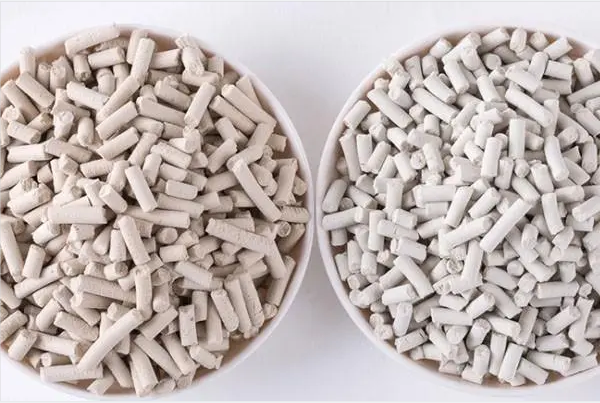
1. Calcium desulfurization
The use of calcium sulfate chemical and physical stability to achieve desulfurization purposes, raw materials are limestone, slaking lime, etc., the first is to dissolve SO2:
SO2+H2O=H2SO3, H2SO3=HSO3-+H+, HSO3-=H++SO32-
To dissolve limestone:
CaO+H2O=Ca(OH)2, Ca(OH)2=Ca2++2OH-,
Chemically react the two solutions to absorb dissolved SO2:
Ca2++SO32-=CaSO3, CaSO3+(1/2)H2O=CaSO3·(1/2)H2O.
To oxidize the liquid:
HSO3-+(1/2)O2=H++SO42-, Ca2++SO42-=CaSO4↓, CaSO4+2H2O=CaSO4·2H2O↓
The final product is CaSO4·2H2O↓ (gypsum), a stable substance that is insoluble in water and can be used as a raw material for building materials and cement.
The above method is the chemical mechanism of limestone-gypsum flue gas desulfurization (FGD).
2. Magnesium desulfurization
The method of desulfurization using Chinese specialty magnesium oxide, raw materials are magnesium ore, magnesium oxide, etc., also through SO2 dissolution, MgO dissolution: MgO+H2O=Mg(OH)2, MgO+2CO2+H2O=Mg(HCO3)2,
Chemically react the two solutions to absorb dissolved SO2:
Mg(OH)2+SO2=MgSO3+H2O,
Mg(HCO3)2+SO2=MgSO3+H2O+2CO2,
MgSO3+H2O+SO2=Mg(HSO3)2,
MgO+Mg(HSO3)2=2MgSO3+H2O
An excess of 5% MgO is required to complete this process.
To oxidize the liquid:
MgSO3+1/2O2=MgSO4,
MgO+SO2+1/2O2=MgSO4 after crystallization concentration can produce fertilizer grade MgSO4·1H2O, can also produce industrial grade MgSO4·7HO, if the oxidation of MgSO3 is not carried out or inhibited, can regenerate desulfurizer and produce sulfuric acid.
3. Ammonia desulfurization
Using ammonia and ammonia water to react with sulfur dioxide and nitrogen oxides, it plays the role of desulfurization and denitrification. Also, SO2, NO and NO2 are dissolved with water first to form HSO3, HSO4 and HNO3, and then chemically react with NH3 and ammonia water:
H2SO4+2NH3=(NH4)2SO4, HNO3+NH3=NH4NO3,
SO2+H2O+1/2O2=H2SO4, H2SO3+2NH3=(NH4)2SO3,
(NH4)2SO3+H2O+SO2=2NH4HSO3, NH4HSO3+NH3=(NH4)2SO3.
(NH4)2SO3 can be oxidized by the atmosphere within a few hours: (NH4)2SO3+1/2O2=(NH4)2SO4 ammonia method has the advantages of less consumption, less secondary pollution, a wide range of byproducts (can be used as ammonia fertilizer), and can also achieve recycling, desulfurization, and denitrification at one time, but the price of ammonia water is high 1200-1500 yuan/ton, supporting equipment requirements are high, and one-time investment is large.
4. Sodium desulfurization
Desulfurization is carried out by using caustic soda and soda ash as absorption solution. SO2 reacts with NaOH and Na2CO3 in water:
2NaOH+SO2=Na2SO3+H2O,
Na2CO3+SO2=Na2SO3+CO2↑,
Na2SO3+SO2+H2O=2NaHSO3,
NaHSO3+NaOH=Na2SO3+H2O,
2NaHSO3+Na2CO3=2Na2SO3+H2O+CO2↑
The difference in solubility between Na2SO3 and NaHSO3 in water can be used in the treatment of absorption solution to crystallize Na2SO3 as a by-product, or decompose it with acid to regenerate it. The price of caustic soda and soda ash is relatively high, and the corrosion is also relatively high, the use in the current world is not very common, on the basis of sodium method, adding limestone to produce gypsum in the later stage can save part of the caustic soda and soda ash, which is the double alkali method.
5. Carbon desulfurization
It is a method to remove sulfur dioxide from flue gas and recover sulfur resources by using adsorption property or catalytic oxidation property of carbon material. The mechanism is that SO2, O2 and H2O are adsorbed by activated carbon.
Catalytic oxidation:
SO2+1/2O2=SO3
It then hydrates to form an acid:
SO3+H2O=H2SO4
After rinsing the adsorbent material with water, the adsorption activity of the adsorbent is regenerated and dilute sulfuric acid is produced:
H2SO4+n H2O=H2SO4·n H2O
Concentrate and become a by-product. The carbon desulfurization process is short, simple operation and maintenance, small desulfurizer consumption, small water consumption, low desulfurization cost, and comprehensive utilization of by-products, but the desulfurization capacity is small, energy consumption and carbon consumption is large, and desulfurization efficiency is low, so it can not be used for large-scale boilers now, and there is no industrialization.
Seawater/calcium carbide slag/Industrial wastewater/boiler wastewater desulfurization:
Excessive carbonate (sodium, calcium) in seawater, calcium carbonate in calcium carbide slag, alkaline substances in industrial wastewater and boiler wastewater can react with acidic sulfur dioxide and play a desulphurization role. It is a resource that can be used comprehensively, but it has some shortcomings such as not easy to control the concentration, unstable desulfurization effect and poor desulfurization effect in practical application, and it should be adapted to local conditions.
