Address
304 North Cardinal St.
Dorchester Center, MA 02124
Work Hours
Monday to Friday: 7AM - 7PM
Weekend: 10AM - 5PM
Address
304 North Cardinal St.
Dorchester Center, MA 02124
Work Hours
Monday to Friday: 7AM - 7PM
Weekend: 10AM - 5PM

The effect of polymeric flocculants varies according to the state of the raw water being treated. The type, size, concentration and PH of suspended matter in raw water will vary according to the water quality. It is also important to note that these conditions are often constantly changing as well. Stirring conditions also affect the state of flocculent formation. Therefore, to get the best results, we need to adjust the PH and mixing conditions. The high molecular weight flocculants required will vary for flocculation precipitation, pressurized air flotation, sludge dewatering and other treatment purposes.
Type:
(1) The effect of polymeric flocculants In order to select the best flocculant, the user must take into account the above factors and make selected tests that are very similar to the actual conditions of use.
(2) Test methods The test steps are different due to different treatment methods. But under normal conditions, the raw water that needs to be treated is poured into a measuring cylinder and left to stand for one hour. If most of the sludge has already settled, it can be treated with high molecular weight flocculants alone. Tests were started with representative anionic, non-ionic and cationic high molecular weight flocculants. Select a flocculant that produces a stable flocculation. Distinguish whether the ion is anion or cation. Then the best flocculant type was determined by comparing weak, medium and strong anions and cations. After determining the appropriate type of flocculant, choose two or three products from that type. Determine the optimal dosage of the product to produce the best precipitation rate, clarity, and dehydration effect.
(3) Use in combination with other chemicals If the use of high molecular weight flocculants alone fails to produce the desired effect, the effect can be improved by combining with aluminum sulfate, polyaluminum chloride and other inorganic flocculants. In addition, according to different sludge types, the use of cationic high molecular weight flocculants instead of inorganic flocculants may also produce better results. When these chemicals are added, inorganic flocculants are usually first added and stirred, and then polymer flocculants are mixed.
Nature:
A class of chemicals used to remove or reduce turbidity or suspended matter in water, resulting in the formation of large granular aggregates, and accelerating the rate of sedimentation of impurities and sludge in water. Including inorganic and organic flocculants two categories. Inorganic flocculants mainly have two kinds of aluminum salt and iron salt, such as aluminum sulfate, polyalumina, ferric chloride and ferrous sulfate. Organic flocculants can be divided into anionic, cationic and non-ionic types according to their electrification. Mainly sodium polyacrylate, carboxymethyl cellulose (anionic), polyvinyl imine (cationic), polyethylene oxide, polyacrylamide (non-ionic) and so on.
Sort:
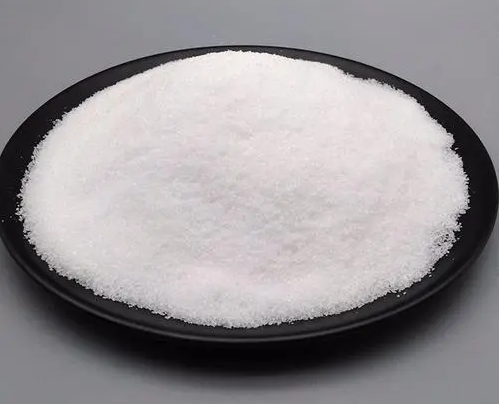
1. Organic flocculant: PAM is divided into anionic polyacrylamide, cationic polyacrylamide, non-ionic polyacrylamide. According to the size of molecular weight, polyacrylamide can be divided into ultra-high relative molecular weight polyacrylamide, high relative molecular weight polyacrylamide, medium relative molecular weight polyacrylamide and low relative molecular weight polyacrylamide. Ultra-high relative molecular weight polyacrylamide is mainly used for tertiary oil recovery in oil fields, high relative molecular weight polyacrylamide is mainly used as flocculant, medium relative molecular weight polyacrylamide is mainly used as dry strength agent for paper, and low relative molecular weight polyacrylamide is mainly used as dispersant.
2. Double-machine flocculant: The agent contains modified plant polyphenols, because it simultaneously contains phenol hydroxyl, alcohol hydroxyl, carboxyl and other reactive groups and active sites, as well as nucleophilic center and electrophilic center, so that it can simultaneously occur nucleophilic, electrophilic and other chemical reactions. The advantages and advantages of organic and inorganic flocculants are well integrated in technology, and the disadvantages of traditional organic and inorganic flocculants not dissolving each other when they are put together at the same time are overcome. The chemical is used in the treatment of erythromycin pretreatment, starch processing, water reuse, beer, phytin, municipal sewage, garbage leachate, alcohol production and other difficult sewage treatment. It has the characteristics of low one-time investment, simple process, simple operation, low operating cost and good effect.
Instructions for use:
(1) The use of automatic highly dispersed dissolver flocculants must be dispersed and carefully dissolved to avoid the adhesion between particles caused by the rapid dissolution of the powder surface, resulting in a “fish eye” that fails to dissolve inside the particles. Therefore, it is common practice to use various types of dispersion dissolvers. If a powder dispersion dissolver is not used, the following steps should be followed to dissolve.
(2) Different dispersing dissolver water to half of the volume of the dissolving tank. To stir with a mixer, the weighed flocculant is calmly and rapidly poured along the edge of the stirred vortex. It is important that the flocculant be thoroughly mixed with the solvent before the viscosity of the solution becomes large. If the viscosity of the solution is too great, caking will occur. Add water to specified position and adjust to specific concentration. Continue stirring until the high molecular weight flocculate is completely dissolved.
(3) Attention should be paid to the dissolution time of the project according to the following circumstances, the time required to dissolve the flocculant will vary:
a. Types of high molecular weight flocculants;
b. Water quality for dissolving flocculants;
c. Water temperature;
d. Mixing efficiency.
However, most flocculants usually require a stirring time of about 1 hour to fully dissolve the powder. Inadequate mixing or caking of the flocculant may affect the performance of the flocculant and may even produce deposits and block pipes and pumps. The ideal speed for mixing is 200 to 400 revolutions per minute. We recommend against using a high speed mixer that cannot reduce the motor rotation speed. Because it can destroy flocculant molecules. For a mixing tank with a volume of 1 to 2 cubic meters, the ideal mixer motor power should be 1 horsepower. Dissolution rate Anionic and non-ionic flocculants are usually dissolved in a solvent with a concentration of 0.1%, while cationic flocculants can be dissolved in a solvent with a concentration of 0.2%. It is also possible to start dissolving at a slightly higher concentration and then dilute the flocculant mixture immediately before use.
Application field:
1. Urban sewage is treated with highly efficient mixed bacteria with flocculation and degradation function isolated from urban domestic sewage, which can make the removal rate of COD and BOD in sewage reach 100%1 [0].
2. Building materials wastewater containing high suspended matter building materials processing wastewater is also more difficult to treat a class of wastewater, such as ceramics factory wastewater, mainly including embryo wastewater and glaze wastewater two kinds, the former mainly contains more clay particles, the latter in addition to containing clay particles, there is a considerable amount of glaze. When NOC-1 was added 5 min, the turbidity of embryo waste water decreased from 1.4 to 0.043. The turbidity of glaze wastewater decreased from 17.2 to 0.35. Turbidity removal rates were 96.6% and 97.9%, respectively, and an almost transparent supernatant was obtained [2]. The flocculant produced by Rhodococcus rubroplanus was used to treat the tile plant wastewater, and the supernatant after treatment was almost transparent [13].
3. Other applications Due to the safety and non-toxic characteristics of water treatment flocculants, they have been gradually adopted in food wastewater treatment, and have achieved satisfactory results.
In addition, microbial flocculants can also be widely used in the treatment process of urban sewage, hospital sewage, petrochemical wastewater, paper waste liquid, pharmaceutical wastewater and other aspects.
Conclusion: In summary, the development trend of flocculants is from low molecule to polymer, from inorganic to organic and microbial, from single type to compound type. The pursuit of high efficiency, low cost and environmental protection is the goal of the development of flocculants, targeted development of non-toxic or low toxicity and high efficiency flocculants, so that their biological toxicity and residual amount in drinking water and other water treatment related to human activities will not cause two times of pollution, is an important direction of future flocculant research and development. Secondly, to strengthen the quantitative study of flocculation effect and reduce the production cost is the urgent task of developing new flocculants. Under the dual drive of theory and practice, safe, non-toxic and efficient water treatment flocculants have a tendency to replace traditional flocculants. Inorganic and organic polymer composite flocculants have been widely developed at home and abroad because of the advantages of inorganic and organic, and have become a hot spot in the study of flocculants.
Working principle:
Flocculation precipitation method is the selection of inorganic flocculant (such as aluminum sulfate) and organic anionic flocculant polyacrylamide (PAM) prepared into an aqueous solution into the wastewater, it will produce a compressed double electric layer, so that the suspended particles in the wastewater lose stability, colloidal particles coacervate each other to increase the particles, forming flocculants, alum flowers. When the flocculant grows to a certain volume, it is separated from the water phase precipitation under the action of gravity, so as to remove a large number of suspended solids in the wastewater, so as to achieve the effect of water treatment. In order to improve the separation effect, the coagulant aid can be added timely and appropriately. The treated wastewater can basically meet the discharge standards in terms of chroma, chromium and suspended matter content, and can be discharged or used as reinjection water for artificial water injection.
Factors affecting flocculation:
Flocculation is a complex physical and chemical process, and the effect of flocculation treatment is the result of the comprehensive action of many factors. The main factors affecting the flocculation effect are as follows:
1. The effect of temperature: the flocculation effect will be improved when the water temperature rises, and the dosage of flocculant must be increased under low temperature conditions. On the other hand, the water temperature is too high, the flocculation formed is small, the sludge moisture content increases, and it is difficult to deal with. Therefore, the water temperature is too high or too low for flocculation. General water temperature conditions should be controlled at 20-30℃.
2. The impact of water PH value: each flocculant has its suitable PH range, beyond its range will affect the flocculation effect. For example, polyacrylamide, the cationic type is suitable for use in acidic and neutral environments, the anionic type is suitable for use in neutral and alkaline environments, and the non-ionic type is suitable for use in environments from strong acid to alkaline.
3. Properties and structural effects of flocculants: For polymer flocculants, their structure and properties have a great impact on flocculation. The higher the degree of polymerization of inorganic polymer flocculant, the stronger its electric neutralization ability and adsorption bridging function. For organic flocculants, in addition to the effect of polymerization degree, the flocculant with linear structure has a large flocculation effect, while the flocculant with circular or branched-chain structure has a poor flocculation effect.
4. The influence of the dosage of flocculant: all kinds of flocculants have the optimal dosage under the corresponding conditions, and less than or more than this optimal amount will make the flocculation effect worse. When the amount is insufficient, the flocculation is not complete, and the excessive amount will cause the re-stability of the colloid and reduce the flocculation effect. Therefore, different flocculants should be tested before use to determine the optimal amount of addition.
5. The influence of hydraulic conditions: In order to make the flocculant fully contact with the water body and increase the particle collision rate, mechanical agitation is often carried out, and the speed and time of agitation must be appropriate. Stirring time is too short, flocculation is not enough; The stirring speed is too fast and the time is too long, which will break the flocculation that has been formed and reduce the bridging adsorption capacity of the polymer chain.
