Address
304 North Cardinal St.
Dorchester Center, MA 02124
Work Hours
Monday to Friday: 7AM - 7PM
Weekend: 10AM - 5PM
Address
304 North Cardinal St.
Dorchester Center, MA 02124
Work Hours
Monday to Friday: 7AM - 7PM
Weekend: 10AM - 5PM

There was a great deal of disagreement in the academic community about the formation of crude oil. One theory is that crude oil comes from the synthesis of inorganic substances, and in the magma under high temperature and high pressure conditions deep underground, inorganic substances such as carbon dioxide and hydrogen are synthesized into crude oil after a long reaction of carbonizing inorganic substances.
Another view is that the formation of crude oil comes from organic matter. Almost all known oil fields are found in sedimentary rocks, where fossils and other rich biological remains can be seen. In addition, researchers have found through experiments that proteins, carbohydrates, and fats in living organisms can form substances similar to hydrocarbons in crude oil under certain conditions. Therefore, “organic theory” has become the mainstream view on the formation of crude oil in the academic circle.
In most people’s perception, crude oil is mostly black and brown viscous matter, why the oil is transparent and colorless this time? Colorless crude oil is no or less gum, asphaltene oil, generally condensate oil. When condensate oil is stored underground, due to high formation pressure and high temperature, it is often transformed into a gaseous state or dissolved in the gas in the form of small droplets, that is, exists in the form of natural gas and is called condensate gas. In the process of being mined out of the surface, the pressure and temperature continue to decrease, and the condensate gas condenses into liquid crude oil is
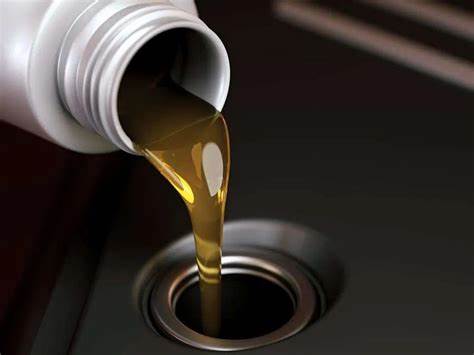
produced out of the surface.
At present, there are 3 situations in which colorless crude oil can be formed:
(1) Colorless crude oil is formed by underground differentiation, and the internal fluid in the reservoir forms the distribution difference of gas cap, oil column and bottom water from top to bottom according to the difference in density, and the light part that accumulates and flows easily converges into condensate gas;
(2) It is also possible that in a relatively closed underground environment, if the generated crude oil is not discharged in time, it will crack under high temperature and high pressure conditions, resulting in the increase of light components, the formation of natural gas and other components, and condensate gas will also appear at the same time;
(3) In addition, there is another situation that because natural gas has the characteristics of small molecules and strong fluidity, natural gas from different sources is easy to be filled into the same space to form reservoirs, and condensate oil will also appear after exploitation.
In fact, this is not the first time colorless crude has been produced. California, Romania and Indonesia’s Sumatra have all produced colorless crude before this. It is understood that colorless crude oil can be directly used as fuel, which has higher

utilization value than ordinary black crude oil.
2. Which quality of crude oil color is good?
Common crude oil has red, green, black, brown and other colors. So what are the main factors that determine these colors? Can you judge the quality of crude oil by its color?
Crude oil generally has four ethnic components, namely saturated hydrocarbons, aromatics, colloid and asphaltene. Among them, saturated hydrocarbons have no color, aromatic hydrocarbons are yellow, gum and asphaltene are brown and black, and the different colors of crude oil are mainly related to the different proportions of aromatic, gum and asphaltene contained in it. The darker the color, the higher the content of gum, asphaltene, from the perspective of crude oil as a fuel, these two components are impurities, so people will empirically believe that the darker the color of crude oil, the worse the quality.
In the past, people used to judge the quality of crude oil by color, and even taste to judge the quality of crude oil. Poor quality crude oil has a high sulfur content, a sour taste, and usually a high carbon dioxide content, and the refining process is complex and unsafe to use. Now people can tell by API specific gravity (a measure of oil density, the higher the API degree, the lower the relative density of crude oil, the higher the price).

3, so different quality of crude oil, do you need different refining processes?
There are many basic methods for refining crude oil, such as distillation, which uses the principle of gasification and condensation to divide oil into various components with different boiling points. The lighter the component, the lower the boiling point, the fractionated out first, and this part of oil has the best quality. In addition, there is a common cracking method, which changes the molecular structure of heavy oil under certain conditions and can increase the proportion of light components.
No matter what kind of refining method, the obtained is only the fraction of the finished oil, and then through refining and blending procedures, adding additives to improve its performance, and reaching the target requirements of the product, it is considered to be the finished oil.
Different colors of crude oil, because the content of gum, asphaltene is different, the specific operation of the refining process is also slightly different. In general, this difference is mainly reflected in the processing process and equipment, for example, processing light oil refineries are difficult to process heavy oil, because of the lack of heavy oil refining equipment such as delayed coking.
